
This is an old revision of the document!
Table of Contents
Races | Culture
THE EXOHUMAN GOVERNMENTAL AND LEGAL SYSTEM IN THE BETA AGE
Overview
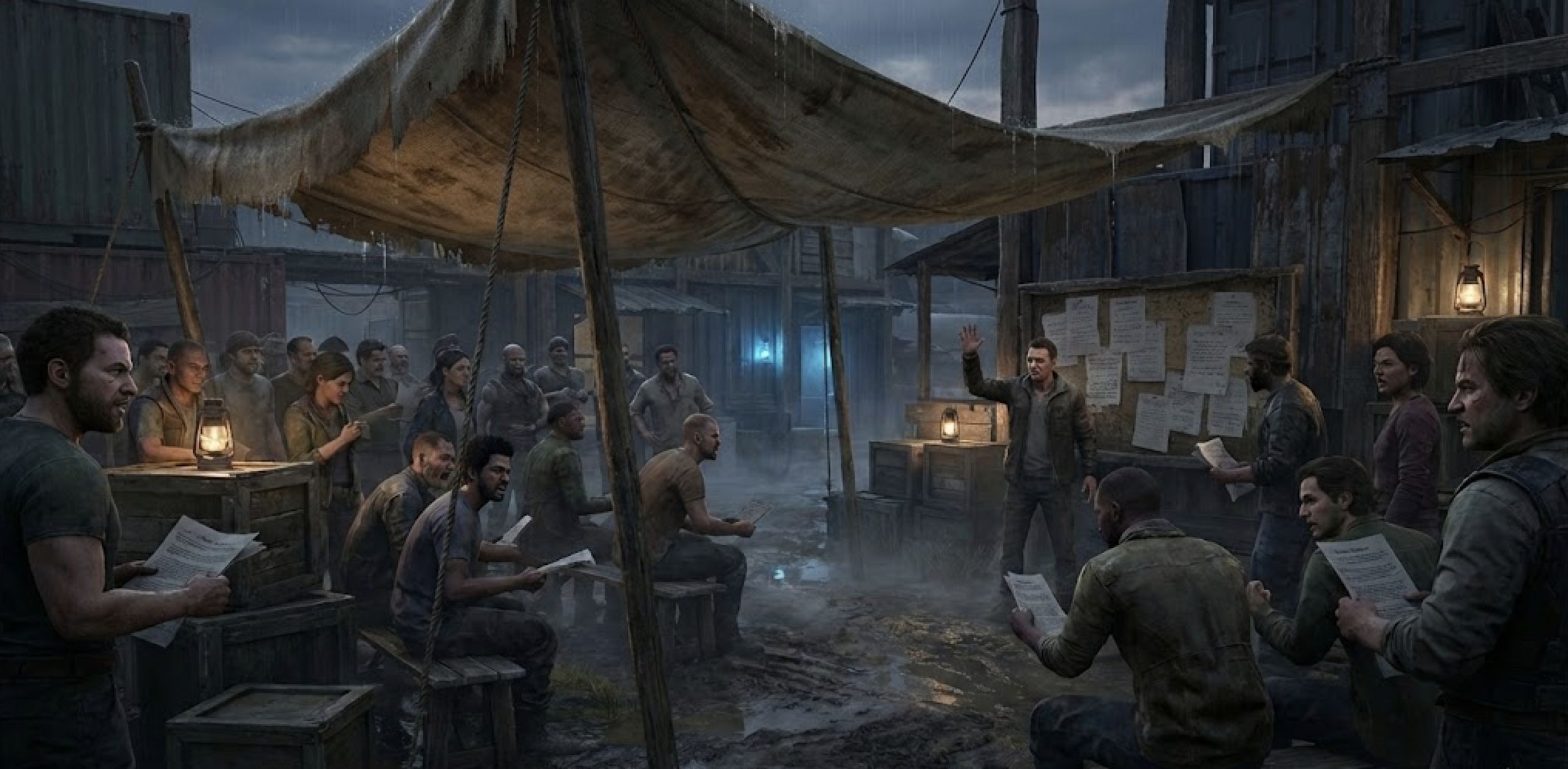
During the Beta Age on VOI 700 D (2625–2631), the ExoHumans organized themselves under the democratic framework of the Free State of Settlers. This government blended direct and representative democracy — via local Contact Persons, Community Centers, quarterly referenda, and the Settler’s Council — which acted as both the highest legislative and judicial authority. Foundational documents (the First Constitution, the Civil Code, and the Criminal Code) were drafted by GAIA but ratified and enforced by the settlers themselves.
The structure and foundational documents of the Free State, including the First Constitution, the Civil Code, and the Criminal Code, were initially drafted by the artificial intelligence GAIA. GAIA, with its advanced analytical capabilities, was instrumental in creating a cohesive legal and governmental framework tailored to the settlers' needs. However, ultimate authority rested with the settlers, who ratified these drafts through democratic processes, reinforcing their commitment to self-governance.
The governmental structure evolved from the governance model devised by the European Space Agency for the Last Frontier, which all passengers had agreed to before departure. While embracing their newfound freedom, the settlers recognized the need for a unified system to ensure order and survival in their challenging new environment.
Key Features of the Free State of Settlers
1. The Settler’s Council
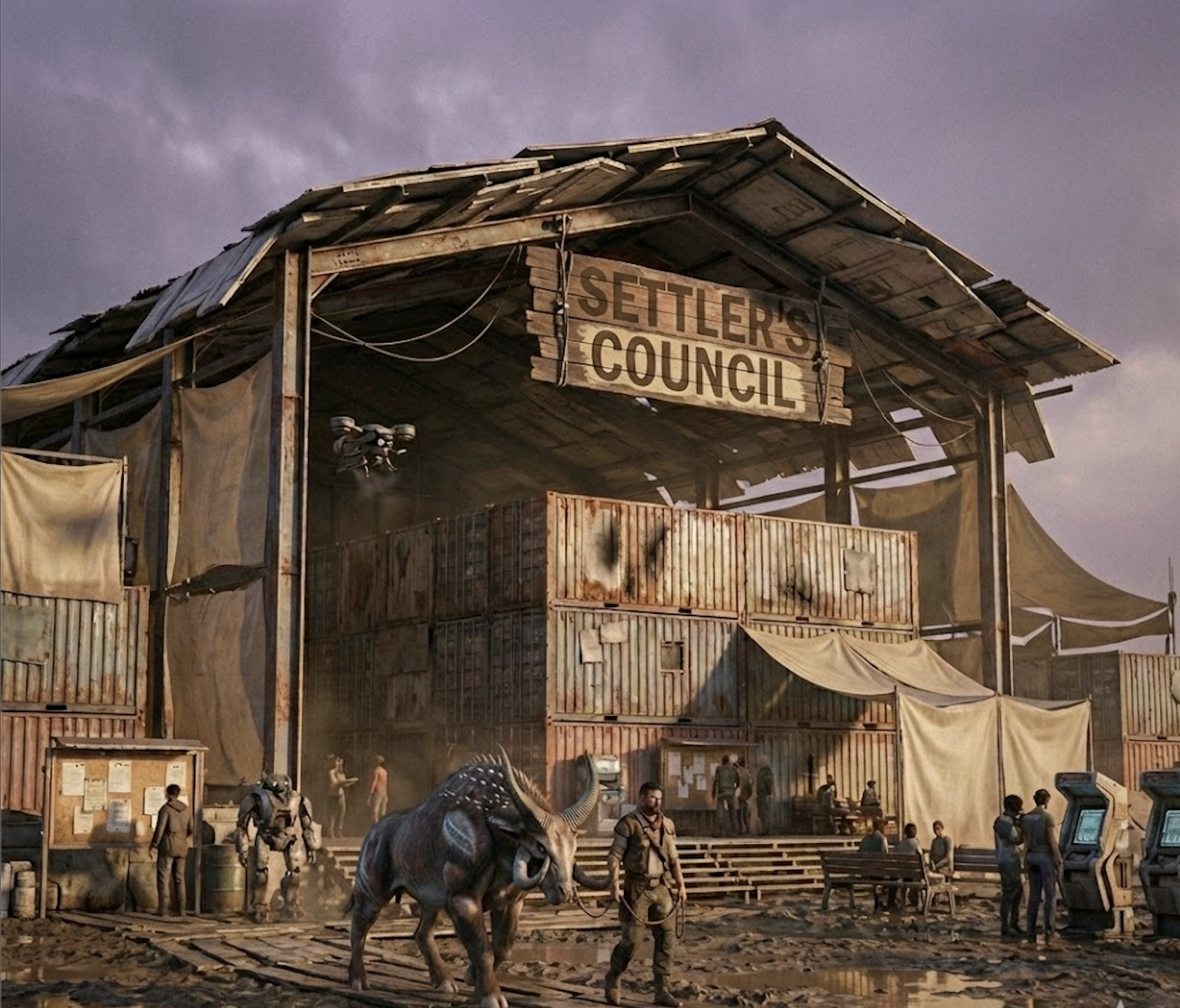
The Settler’s Council was the central governing body, embodying both legislative and judicial authority.
- Composition: Five elected councillors, serving two-year terms.
- Election Process: All adult citizens participated in the elections, reflecting a commitment to democratic inclusivity.
- Headquarters: Located in New Kourou, the administrative center of the Free State.
Responsibilities:
- Drafting and enacting laws based on the majority will, which were then ratified by public referenda.
- Overseeing adherence to these laws and functioning as the highest court of law.
- Ensuring effective enforcement through the Guarding Troopers.
2. The Guarding Troopers

The Guarding Troopers served as the executive and enforcement arm of the Settler’s Council, responsible for maintaining order, adjudicating minor disputes on-site, and — once the Great War erupted — acting as the Volunteer Army of Man’s elite “special operations” force behind enemy lines.
Composition:
Roughly 250 troopers, drawn from Last Frontier security personnel and early settler volunteers.
Command Structure:
- General Trooper (1): The overall commander of the Guarding Troopers, elected by his or her fellow troopers every four years. The General sets broad strategic priorities, oversees training and discipline, and liaises directly with the Settler’s Council and Contact Persons of each settlement.
- Headquarters (New Kourou): The administrative heart of the Troopers, housing central arms stores, intelligence archives, and the central detention wing and prison for sentenced criminals.
- Local Stations: Each settlement (New Kourou, Hope, Morningstar, Arla Town, Firetown) hosted one Guarding Trooper Station, led by a Station Commander (appointed by the General Trooper).
Duties and Jurisdiction of the Local Stations:

- Local Law Enforcement: Stations enforced the Criminal and Civil Codes within their settlement boundaries—investigating crimes, arresting offenders, and managing detention cells.
- Detention and Transfer: Each station operated two holding cells for arrested individuals. After summary hearings or referral by the Local Sheriff, convicted offenders were transferred to the Central Prison in New Kourou for long-term sentences.
- Support to the Volunteer Army of Man: During the Great War, troopers provided garrison forces, manned frontier outposts, and escorted high-risk supply convoys.
- Subordination: Stations were strictly subordinate to Headquarters; Station Commanders reported operational statistics, case files, and manpower rosters back to New Kourou on a weekly basis.
Armament & Equipment:
- Standard Issue: Laser Guns for patrol troopers, Guarding Troopers Stun Guns for riot control, and Guarding Troopers Combat Knives.
- Non-Human Support: Guarding Bots staffed each station—patrol bots on multi-terrain treads, cell-guard bots in the detention lofts, and a Combat Drone for perimeter security.
Election & Oversight:
- The General Trooper was elected by secret ballot of all full-rank troopers every four years.
- Station Commanders were career troopers selected and appointed by the General, serving at the General’s pleasure and subject to performance review by Headquarters.
Stations Network:
- New Kourou HQ: (Headquarters and Central Prison)
Legacy:
By the end of the Great War, the Guarding Troopers had enforced hundreds of criminal judgments and weathered frontier chaos. The Peace Treaty and formation of the Federal Confederation in 2632 saw the troopers reorganized into the Federal Sheriff System — but many of their Beta Age traditions, from the General’s election to the network of local stations, influenced the design of the new, settlement-level Sheriff’s Offices.
3. The Human Constitution of the Beta Age
Nicknamed the First Constitution, this foundational legal document embodied the settlers' desire for maximum individual freedom tempered by collective responsibility.
- Ratification Date: October 31, 2625.
Core Principles:
- Equality and Freedom: All citizens were guaranteed equality before the law (§1) and the greatest possible individual freedom, provided their actions did not infringe on others (§2).
- Religious Freedom: Citizens had the right to choose, practice, and change their religion or beliefs (§3).
- Commitment to Peace: The community declared itself peaceful but recognized the duty to defend its peace when disturbed (§4).
- Justice and Fair Trials: The Constitution guaranteed fair and public trials before impartial courts (§5).
4. Contact Persons
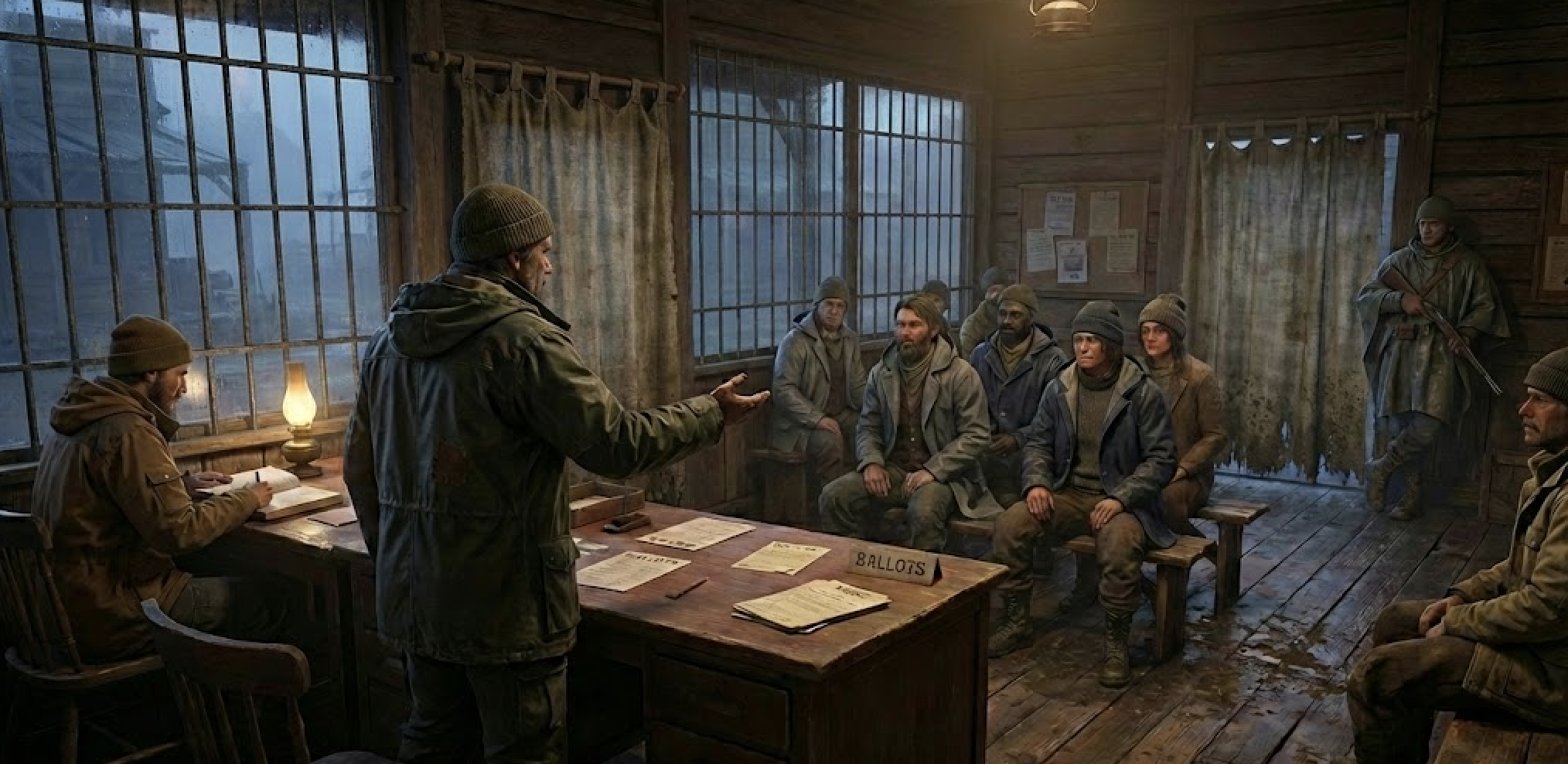
Each settlement elected a Contact Person annually to serve as its chief representative and local governor.
- Formalized: October 3, 2625 alongside the First Constitution
- Election: One-year, non-partisan, volunteer role elected by all adult settlers in New Kourou, Firetown, Hope, Morningstar, and Arla Town
- Office: Housed in the Community Center; typically supported by a single clerk
- Criticisms: Campaign costs and volunteer burden favored the well-connected
Duties:
- Chair community assemblies & local referenda
- Mediate civil disputes; refer criminal cases to Guarding Troopers
- Submit top local proposals and carry Council-drafted bills to referenda
- Coordinate crisis response (tribal clashes, disasters)
- Liaise quarterly with Settler’s Council
5. Community Centers & Local GAIA Hubs
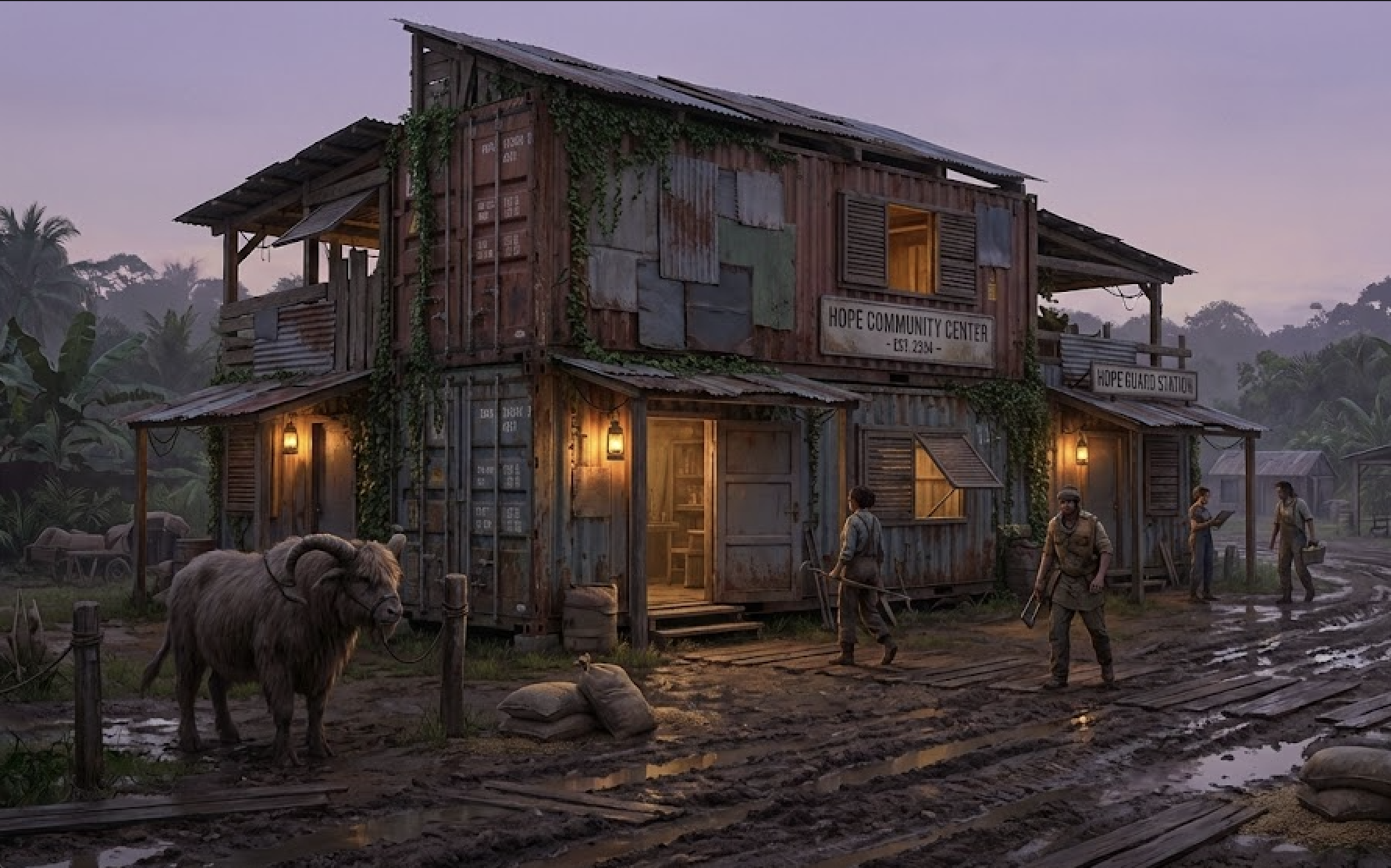
Every settlement’s Community Center served as its administrative hub, referendum venue, and—after Day Zero—host to a Local GAIA Hub, a fortified mini-instance of GAIA.
Functions:
- Record public referenda (local prioritization & Council proposals)
- House the Contact Person’s office and community archives
- Secure GAIA Core Vault (optical racks, QFB backup, geothermal feed)
- Provide holo-kiosks for permitting, crisis simulation, and data-court dashboards
Quarterly Council Sessions:
- Submit Local Proposals: Top three referendum measures per settlement
- Receive Council Proposals: Draft laws returned for two-week local vote
- Enact & Publish: Majority-approved measures adopted and posted
- Judicial Appeals: Major appeals heard by Council with Contact Person present
Legacy:
- Renamed Mayor’s Offices in 2632 under the Federal Confederation
- Local GAIA Hubs placed under the new Federal GAIA Agency
- Original layout (public foyer / secure data vault) became the template for Federation municipalities
Legal Framework
The Free State of Settlers prided itself on minimal bureaucracy and an emphasis on personal responsibility. The settlers established two distinct legal codes: the Criminal Code and the Civil Code, both designed to uphold fairness, protect individual freedoms, and maintain order in a rugged, resource-scarce environment.
Criminal Code
The Criminal Code was concise and focused on actions deemed harmful to individuals or society at large. It emphasized deterrence and accountability, with punishments designed to discourage repeat offenses and ensure swift justice. The core articles were:
- Theft: Taking property without consent results in restitution (double the value of stolen goods) and penal labor for up to two years.
- Violence Against Others: Intentional physical harm results in restitution to the victim and a term of penal labor proportional to the severity of the injury.
- Murder: Premeditated murder results in exile or execution, depending on the severity and intent.
- Sabotage: Acts that jeopardize communal infrastructure, such as farms or power systems, result in exile or lifelong penal labor.
- Breach of the Peace: Public disturbances are punished with community service or short-term penal labor.
- Fraud: Deceit causing material harm results in full restitution to the victim and penal labor for up to three years.
Mark of Shame: For each violation of the Criminal Code, the offender received a Mark of Shame, a small tattoo under the left eye. Each mark corresponded to the crime committed, identifiable by specific symbols:
- A circle for theft.
- A lightning bolt for sabotage.
- A slash for violence.
- A triangle for fraud.
Marks were crossed out after the completion of the offender’s sentence but were never removed, serving as a permanent reminder of the individual’s crime and rehabilitation. While controversial, the Mark of Shame was viewed as an effective deterrent and a form of public accountability.
Civil Code
The Civil Code addressed disputes between individuals, focusing on restitution and reconciliation. Its structure was equally lean, built around fundamental principles rather than exhaustive rules.The core Principles were:
- Restitution Over Punishment: Civil disputes were resolved by ensuring the aggrieved party was compensated fairly.
- Direct Mediation: Most cases were resolved through informal arbitration led by the Local Sheriff, ensuring quick resolutions without complex procedures.
- Community Contribution: In unresolved cases, the Settler’s Council acted as a mediator, emphasizing community welfare over individual gain.
Legal and Governance Challenges
- 1. Minimal Oversight and High Autonomy:The Beta Age’s emphasis on minimal regulation created governance challenges, as settlers prioritized individual freedom over centralized control.
- 2. Internal Divisions: The settlers often disagreed on the best approach for survival and coexistence. Some believed in aggressive expansion and resource exploitation, while others sought greater collaboration with the Native Tribes. These philosophical divides often created tensions within the Settler’s Council.
- 3. Great War Strains: The outbreak of the Great War (2629–2631) placed immense pressure on the Free State’s legal and governance systems. The Settler’s Council struggled to maintain order while directing the war effort, and the Guarding Troopers were overburdened by their dual roles as law enforcers and military defenders.
Tactical Advice for Dungeon Masters
- Political Intrigue in the Settler’s Council: Create missions where players navigate the political conflicts between single members of the Council, influencing legislation or swaying public opinion.
- Guarding Troopers’ Missions: Players could take on roles as Guarding Troopers, balancing law enforcement duties with defense against external threats.
- Legal Challenges: Introduce scenarios where players must defend themselves or others in court, arguing cases based on the principles of the First Constitution.
- The Great War: Engage players in wartime missions, such as protecting settlements, sabotaging enemy supply lines, or uncovering anti-war sabotage within ExoHuman ranks.
Related Pages and Further Information
The Ages of the Exohuman history: