
Table of Contents
Races | Culture | Governance
ROLE OF THE CONTACT PERSON
Overview
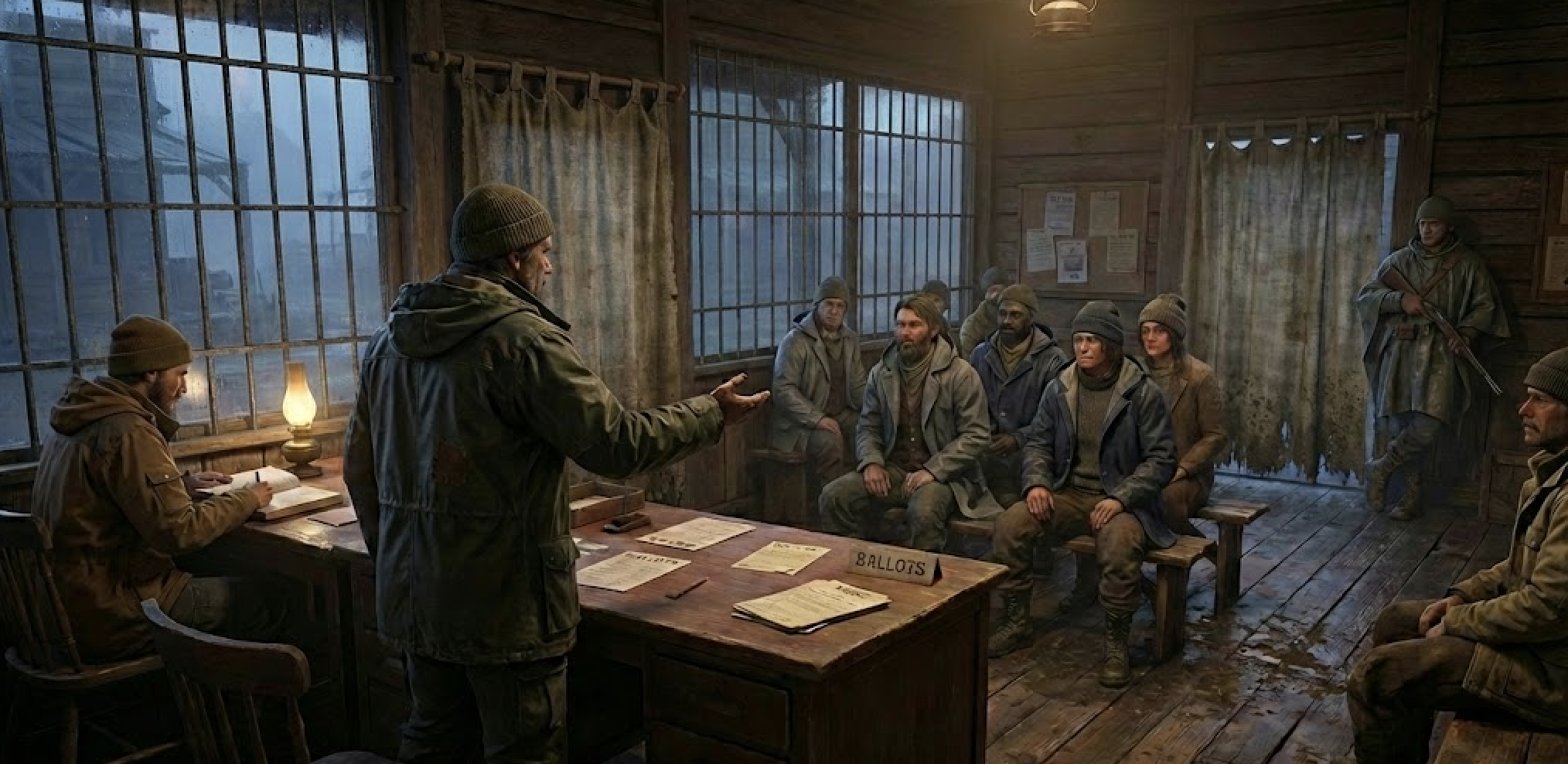
The Contact Person was the chief representative and organizer of each ExoHuman settlement during the Beta Age’s Free State of Settlers. Tasked with mediating local disputes, coordinating communal projects, and advocating for their community’s interests at the Settler’s Council, Contact Persons embodied the settlers’ commitment to participatory democracy and localized leadership amid rapid expansion.
Establishment
- Formalization: Instituted on October 3 2625 alongside ratification of the First Constitution.
- Purpose: Provide a single point of coordination for emerging settlements — overseeing public works, dispute resolution, and liaison with the central government.
Democratic Foundations
- Election Cycle: Annual elections by all adult settlers of each community.
- Settlements Represented: New Kourou, Firetown, Hope, Morningstar, and Arla Town each elected one Contact Person.
- Nature of Office: A volunteer, non-partisan role — political parties and professional politicians did not yet exist.
Responsibilities & Authority
Local Governance:
- Convene and chair community assemblies to debate local policy and resource allocation.
Council Representation:
- Serve as the settlement’s delegate at the Settler’s Council when summoned.
- Advocate for funding, infrastructure projects, and legal exemptions.
Crisis Management:
- Organize defense and relief efforts during emergencies (e.g., tribal clashes, natural disasters).
- Coordinate logistics for critical supplies — food, medicine, and building materials.
Quarterly Council Sessions
Every three months, all five Contact Persons convened with the Settler’s Council in New Kourou. These sessions combined legislative ratification and judicial appeals:
Submission of Local Proposals
- Each Contact Person presented their settlement’s top three referendum-approved measures.
Presentation of Council Proposals
- Councilors unveiled new draft laws and amendments for local ratification.
Judicial Appeals Hearing
- Major criminal or civil appeals from local Guarding Trooper stations were adjudicated by the Council, with the appellant’s Contact Person acting as liaison.
Scheduling & Deliberation
Settler-originated measures already approved locally were formally adopted; council-drafted bills were scheduled for immediate two-week local referenda. After the session, Contact Persons returned home to:
- Organize Local Referenda: Two-week ballots overseen by Guarding Troopers.
- Certify & Report Results: Station Commanders validated outcomes and forwarded them back to the Council.
- Enact & Publish: Measures winning a simple majority were entered into the Statute Roll, posted at each Community Center, and dispatched by courier.
Office & Logistics
- Location: Housed in the settlement’s Community Center — the administrative hub for public records and meetings.
- Staffing: Minimal — typically one clerk or scribe; most duties performed directly by the Contact Person.
- Support Network: Relied on local entrepreneurs, institution heads, and respected elders to implement decisions.
Profile of Officeholders
- Typical Backgrounds: Local entrepreneurs, farmers, sawmill foremen, or heads of major communal enterprises.
- Re-election: Though elected annually, many Contact Persons served multiple consecutive terms, reflecting both competence and the advantage of incumbency.
Criticisms & Challenges
- Concentration of Power: Critics argued that wealthier or better-connected individuals dominated elections, excluding working-class settlers from candidacy.
- Campaign Costs: Without party structures, high campaign expenses favored those with private means or patronage networks.
- Volunteer Burden: The unpaid nature of the office discouraged participation by settlers without independent wealth or institutional support.
Legacy & Transition
- Beta → Gamma Age: Following the Peace Treaty and creation of the Federal Confederation in 2632, the Contact Person role evolved into the municipal mayoralty, with a professionalized Office of the Mayor.
- Institutional Influence: Early practices — annual elections, direct accountability, and community assemblies — shaped the Free State’s successor governance systems and remain commemorated in Federation civic ceremonies.
Related Pages & Further Information
- Federal Confederation (Gamma Age)
- Mayors (Gamma Age)
- Mayor’s Council (Gamma Age)