Table of Contents
KNOWN WILDLIFE OF THE EASTERN EQUATORIAL SECTION OF THE HABITUAL BELT (ASARI)
From A to Z
A
- Arlian Sunfish – Small, schooling fish with reflective orange scales for camouflage. Thermotolerant to warm water in Lake Arla.
- Alnar Shrimp — Tiny filter-feeders that cluster near glowing moss, forming glittering clouds in the shallows.
- Arr – Colossal bird of prey,, wingspan up to 4m, capable of speeds up to 350 km/h. Mates for life.
- Arawi – Gigantic whale-like creature (up to 14m), covered in solar-absorbing fins. Can store energy for long migrations.
B
- Bero Hiki – Small omnivorous worm with tough, rubber-like skin. Has a mouth at both ends.
- Bluestrike Heron – Electric blue plumage, excellent precision hunter, camouflages in water reflections.
- Bogfang – Semi-legendary aquatic predator inhabiting the root-choked channels and deep pools of the Orlanda Marshes.
C
- Cavern Perch – Large, deep-dwelling freshwater predator endemic to the underwater cave networks of Lake Orlanda.
- Croplight "Lemur" – Small, arboreal pollinator native to the canopy of the Orlanda Marshes. It has a distinct mammalian body plan with bat-like wings for short silent glides between trees.
D
- Deep-Orlanda Pike – Large, depth-adapted predatory fish that inhabits the unexplored lower strata of Lake Orlanda.
- Desert Stalker – 2m-long aquatic predator from Lake Arla, adapted to warm water. Hunts smaller fish and amphibians.
- Driftstalk Fish – Camouflaged, schooling fish from the Orlanda Marshes; staple in the Orlanda diet.
F
- Flutterwing – Small pigeon-like bird with shimmering blue-gold feathers. Used like carrier pigeons on Earth.
G
- Gloom Swimmer – Small, elusive fish species native to the dimly lit eastern zones of Lake Arla
- Glowfrog – Bioluminescent amphibian endemic to the wetlands, lake shallows, and reed zones of the Asari Region, particularly around Lake Tijonara, the Tijonara River and the Arla River.
H
- Hollowback Scuttler – is a cave-dwelling freshwater crab found only in the deep cliffside pools of Lake Orlanda
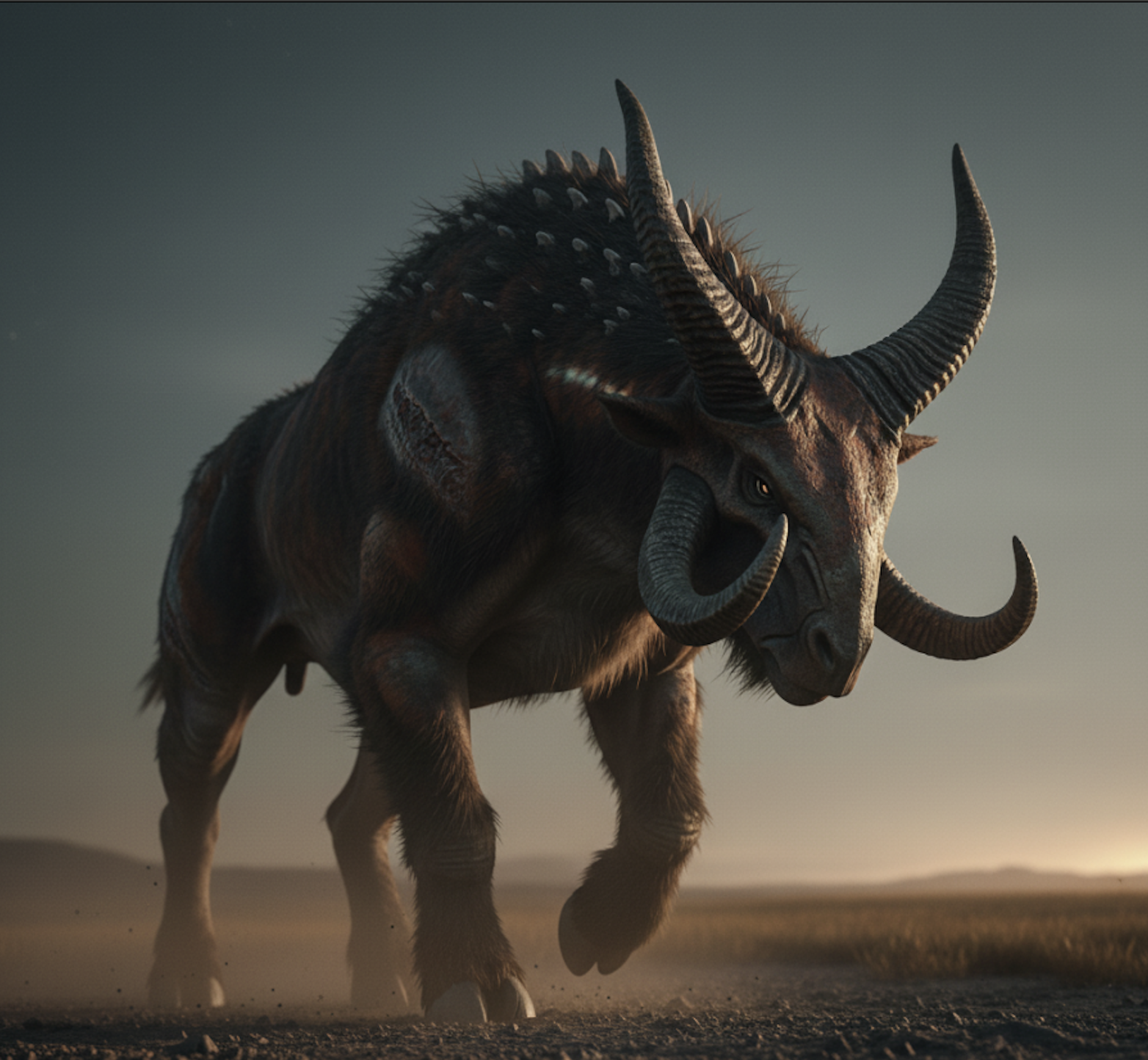
- Hoo – Large herbivore used as a mount. Two curved horns. Originally domesticated by the Native Tribes, the practice was later adopted and expanded by Exohumans, who rely on Hoos as the primary pack and draft animals of the frontier.
I
- Iri-Tenu – Small beetle with a color-changing exoskeleton for camouflage. Uses chemical signals to detect threats.
- Ironjaw Minnow - Small, mineral-feeding fish native to the inflow zones of Lake Arla.
K
- Kardar – Gigantic swamp predator (4.5m), similar to an alligator. Has a lethal spiked tail and bone-crushing jaws.
- Kaon Loper – Long-legged amphibian with a translucent skin. Leaps between tree branches and emits luminous pulses to communicate.
- Kintari – Amphibian found in Atrana Mountain caves. Mimics moss for camouflage. Uses low-frequency croaks for echolocation.
- Krynok – Agile, intelligent primate with tool-use abilities. Lives in Tijonara Mountains.
L
- Lumifish – Small, translucent fish species school beneath floating vegetation where dappled twilight filters through.
- Lumivai Sari – Mimic beetle that imitates the Iri-Tenu to get close before attacking. Hunts using pheromone deception.
M
- Manla – Deer-like herbivore with four ears and three eyes. Can sprint up to 80 km/h.
- Marshbound Lurker – Ambush predator found in the Orlanda Marhes with water-repellent fur and retractable claws; hides in reed thickets.
- Mirrorstripe Loach – Slender, twilight-reactive fish native to the densely vegetated shallows and mid-depth zones of Lake Orlanda.
- Misttail Crab – Hardy, semi-aquatic crustacean found across multiple freshwater ecosystems in the Asari Region.
- Miregnats – Tiny bioluminescent mosquitoes, that form glowing clouds; irritating but non-lethal.
- Moar – Apex predator, that dominates the mountain valleys, preying on herbivores like the Manla and Hoos. Despite its massive size, it is an agile and intelligent hunter, using both stealth and brute strength to overwhelm its prey.
- Moka – Medium-sized, hexapodal browser domesticated across the Asari Region. Bred by Exohumans in the Beta Age for shed fiber (“pen-felt”), light pack work, a mild buccal “cheek-curd,” and eggs,
- Mudtail Grazer – Long-legged quadruped herbivore of the Orlanda Marshes.
- Murkbind Serpent – Semi-aquatic snake with dark mottled scales, found in the Orlanda Marshes, capable of both underwater hunting and ambushing prey from reeds. Often mistaken for a root or vine.
N
- Naka Tula – Low, winged cave predator native to both the karst systems of the Asari Region and the volcanic tunnel networks of the Ralar Region.
- Neshi – Small blood-feeding insects, native to the Tropical Forests in the Atrana Mountain Region.
- Nokari Mouse – Small, fur-insulated rodent originally native to the Asari Region of the Habitual Belt on VOI 700 D. While once confined to Asari’s twilight zones, it has since spread to the Ralar Region, becoming the only documented rodent to survive in the Ralar Tundra.
O
- Odo – Massive herd grazer native to the Tijonara Steppe.
Q
- Quorra — Semi-aquatic benthic forager native to the shallows and reed margins of Lake Tijonara and Lake Arla. Unlike clawed crabs, Quorra use four paddle-ended legs to churn mud and sift for food. A tough, keratinous, bird-like beak lets them chip roots, crack snails, and scrape algae from stone.
R
Rattleback Crawler – Soft-bodied arthropod known for its vibration-based warning system and rhythmic defensive movement.
- Razorfrill Gecko – Small, arboreal predator with extendable frills used to startle prey. Known to cling to the underside of branches and leap onto targets.
- Reedstingers – Large, slow-flying wasp-like insects found in the Orlanda Marshes with painful stings; territorial near nesting zones.
S
- Shardbacks – Medium-sized, turtle-like creatures native to the rocky shorelines and marshy outcrops of Lake Tijonara.
- Shatterjaw Bream – Robust, twilight-reactive fish species native to the mid-depth and shallow zones of Lake Orlanda.
- Shellmire Crab – Armored forest-floor scavenger that uses fallen bark as natural camouflage.
- Silverscale Glider – Sleek, surface-skimming fish species native to the faster-moving currents of the Arla River inflow into Lake Arla.
- Spireclaw Wader – Long-legged aquatic scavenger found throughout the shallow marshes and rocky lakeshores of the Asari Region, especially around Lake Orlanda and the Orlanda River.
- Skyshell Crabs – Semi-aquatic crabs found in the Orlanda Marshes with reflective shells; essential for marsh soil aeration.
- Skyweaver – Agile, eel-like fish known for darting leaps above the water’s surface to catch insects mid-air. Uses sleek movements and precision strikes to feed and evade threats.
T
- Twilight Perch – Bottom-dwelling predatory fish endemic to the nutrient-rich depths of the eastern Lake Arla shoreline
V
Related Pages and Further Information
Wildlife of the Twin Section:
Known Wildlife of all known Regions of VOI 700 D:
- Known Wildlife of the Asari Region (Habitual Belt)
- Known Wildlife of the Ralar Region (Dark Side)
- Known Wildlife of the Dark Sea Region (Dark Side)
- Known Wildlife of Vazhak (Dark Side)
- Known Wildlife of the Tijonara Region (Desert Side)