Table of Contents
Races | Culture
THE HUMAN SETTLEMENT PLAN (HSP)
Overview
The Human Settlement Plan (HSP) was a blueprint for colonizing the original target planet of the Last Frontier project. Developed by Earth’s space agencies, the HSP aimed to establish a self-sustaining ExoHuman society independent of external supply chains. The plan envisioned the use of the multigenerational spacecraft, the Last Frontier, as both a storehouse and a source of materials for building infrastructure, fostering rapid settlement development.
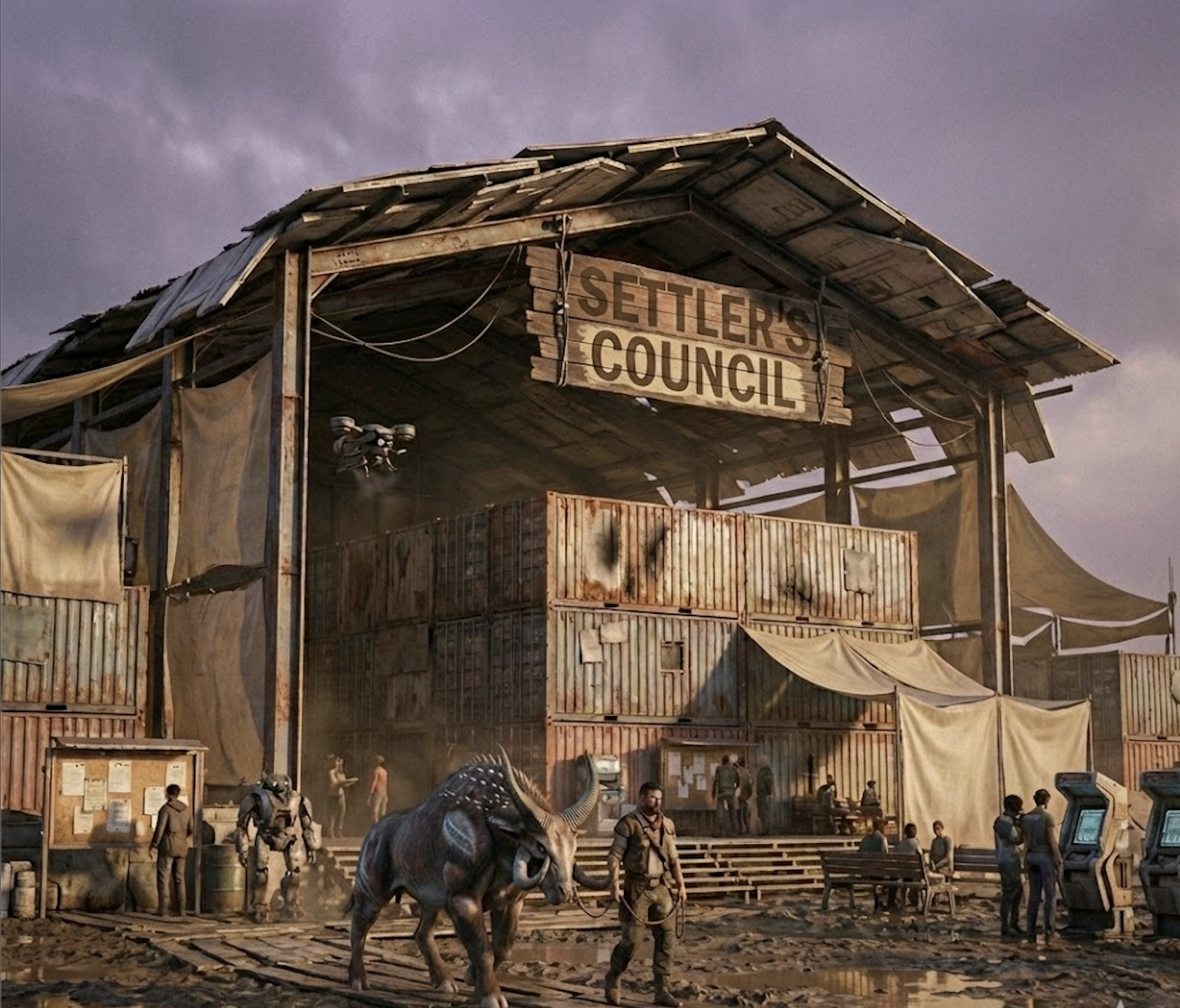
The HSP outlined strategies for housing, administration, industry, transportation, and agriculture, providing detailed instructions for building human society and ensuring survival in the early years after landing. It was not only a technical manual but a legal and ideological framework executed by the newly founded Free State of Settlers through institutions such as the Settler’s Council, the Land Allocation Office, and the Guarding Troopers.
The HSP was officially replaced by the Federal Settlement Plan in 2632 under the Communard Government of Aisha Patel. The Federal Settlement Plan, shaped by the ideals of Communardism and the realities of life on VOI 700 D, prioritized sustainable development and coexistence with the Native Tribes, marking a shift from the growth-oriented vision of the HSP.
Nanotechnology as the Foundation for Settlement
Nanotechnology formed the backbone of the HSP, offering scalable solutions to resource and energy constraints. Nanobots stored aboard the Last Frontier were programmed to assemble infrastructure from molecular building blocks, enabling rapid and adaptive construction.
Applications of Nanotechnology
- Housing: Nanobots were deployed to build modular, durable housing units using composite materials for insulation and strength.
- Vehicles: Vehicles constructed using nanotechnology incorporated energy-harvesting capabilities, including photovoltaic cells and kinetic energy systems, reducing reliance on external power sources.
While nanotechnology was intended to be a key feature of the HSP, the fire aboard the Last Frontier destroyed much of the necessary raw materials. Additionally, energy shortages prevented large-scale nanobot operations. As a result, nanotech was only used minimally in the first year of settlement before becoming completely unsustainable.
Land Distribution System
The land distribution process was a cornerstone of the HSP and was administered by the Land Allocation Office, based in New Kourou. The office ensured that land claims were fairly distributed and legally documented.
- Eligibility: Every adult settler could claim 65 hectares of farmland if they committed to cultivating it for at least ten years.
- Verification: Claimants were required to pass a mandatory agricultural skills test to demonstrate their capability for sustainable land use.
- Non-Farming Roles: Settlers who chose not to pursue farming received increased startup capital instead, allowing them to establish service-based businesses or contribute to urban development.
Weekly public lotteries were held to allocate land plots. Winners selected their preferred parcels from detailed map projections of the Asari Region — the only approved zone for agricultural development during the Beta Age.
To protect legal jurisdiction and ensure proximity to law enforcement, the Settler’s Council limited land distribution to the Asari Region. Although other areas of the Habitual Belt featured fertile terrain, they were excluded in the early phase due to security concerns and logistical limitations. The Ralar Region and the Desert Side were deemed unsuitable for agriculture due to climate extremes, water scarcity, and navigational risks.
Additionally, while settlers were allowed to build homes on their farmland, the founding of new settlements (such as Hope, Morningstar, and Firetown) required formal approval by the Settler’s Council through majority vote.
Challenges on VOI 700 D
- Energy Constraints: Without access to solar energy, settlers relied on Quantum Fusion Batteries (QFBs) as their primary power source. These batteries were recharged at Quantum Fusion Recalibration Stations (QFRS) and redistributed via Energy Redistribution Nodes (ERNs). However, due to energy shortages, infrastructure development stalled, and key construction projects were never completed.
- Material Loss: The fire aboard the Last Frontier destroyed much of the stored raw materials and damaged nanobot capsules. The settlers were forced to adapt the nanobots to work with local materials, which delayed construction and reduced the scale of achievable infrastructure.
- Conflict with Native Tribes: The settlers’ reliance on industrial expansion led to unintentional encroachment on lands claimed by the Native Tribes. This escalated tensions and culminated in the Great War (2629), further complicating settlement efforts.
Political Perception of the HSP
- Communard Perspective: In 2632, the Communard Party formally abandoned the HSP, criticizing its anthropocentric and growth-oriented assumptions. The party argued that the plan failed to account for VOI 700 D’s indigenous populations and environmental realities, considering it unfeasible after the fire and loss of key materials.They replaced the HSP with the Federal Settlement Plan.
- Individualist Perspective: The Individualist Party continues to view the HSP as a blueprint for human civilization. It advocates for revisiting the plan, promising its implementation if the party gains control of the Federal Council.
Influence of the HSP on Human Settlements on VOI 700 D
Despite the partial abandonment of the Human Settlement Plan (HSP), its initial vision still shaped the development of human settlements on VOI 700 D. While nanotechnology could not be fully utilized due to unforeseen challenges, elements of the HSP's town structure and planning principles were adapted to the planet’s unique conditions.
New Kourou: A Hybrid Between HSP and Realty
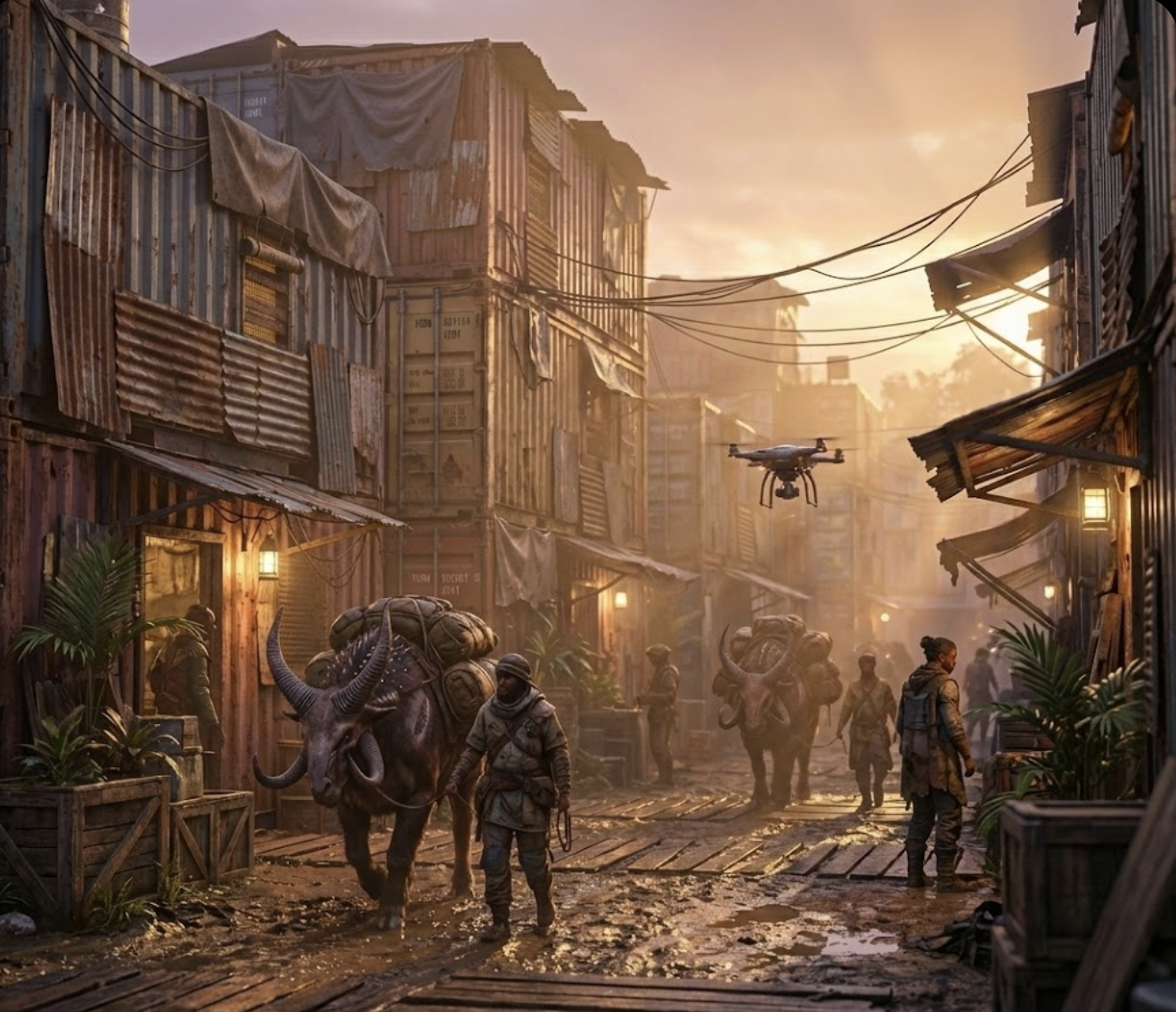
New Kourou closely follows the ring-shaped town structure outlined in the HSP, designed to optimize resource distribution and administrative efficiency. However, due to the inability to deploy nanotechnology for construction, most buildings in New Kourou were constructed from materials salvaged from the Last Frontier spacecraft.
- Material Use: The majority of the settlement’s structures, including residential and commercial buildings, are repurposed from spacecraft materials.
- Gamma Age Additions : Key administrative and community facilities, such as the Federal Council building and the four Allotment Centers, represent the transition to Communard ideals. These structures are built using mycelium blocks, a sustainable material favored by the Communard Party. This blend of approaches marks New Kourou as a symbolic bridge between the ambitions of the HSP and the practicality of the Federal Settlement Plan.
Firetown: Adapting the HSP to Harsh Conditions

Firetown also features the ring-shaped structure envisioned by the HSP. However, its construction reflects the harsh, dark, and cold conditions of the Ralar Region.
- Material Use: Buildings were constructed using volcanic stone from the nearby Ralar volcano, a material well-suited for insulation and durability in subzero temperatures.
- Unique Architecture: Houses in Firetown have no windows to conserve heat and feature thick walls to withstand the relentless cold. The frozen, impenetrable ground also precluded the construction of basements, leading to a more vertical architectural style.
- Legacy of the HSP: While the town’s layout reflects the original plan, the execution demonstrates human ingenuity in adapting to extreme environments.
Morningstar: A Nod to Pioneer Roots
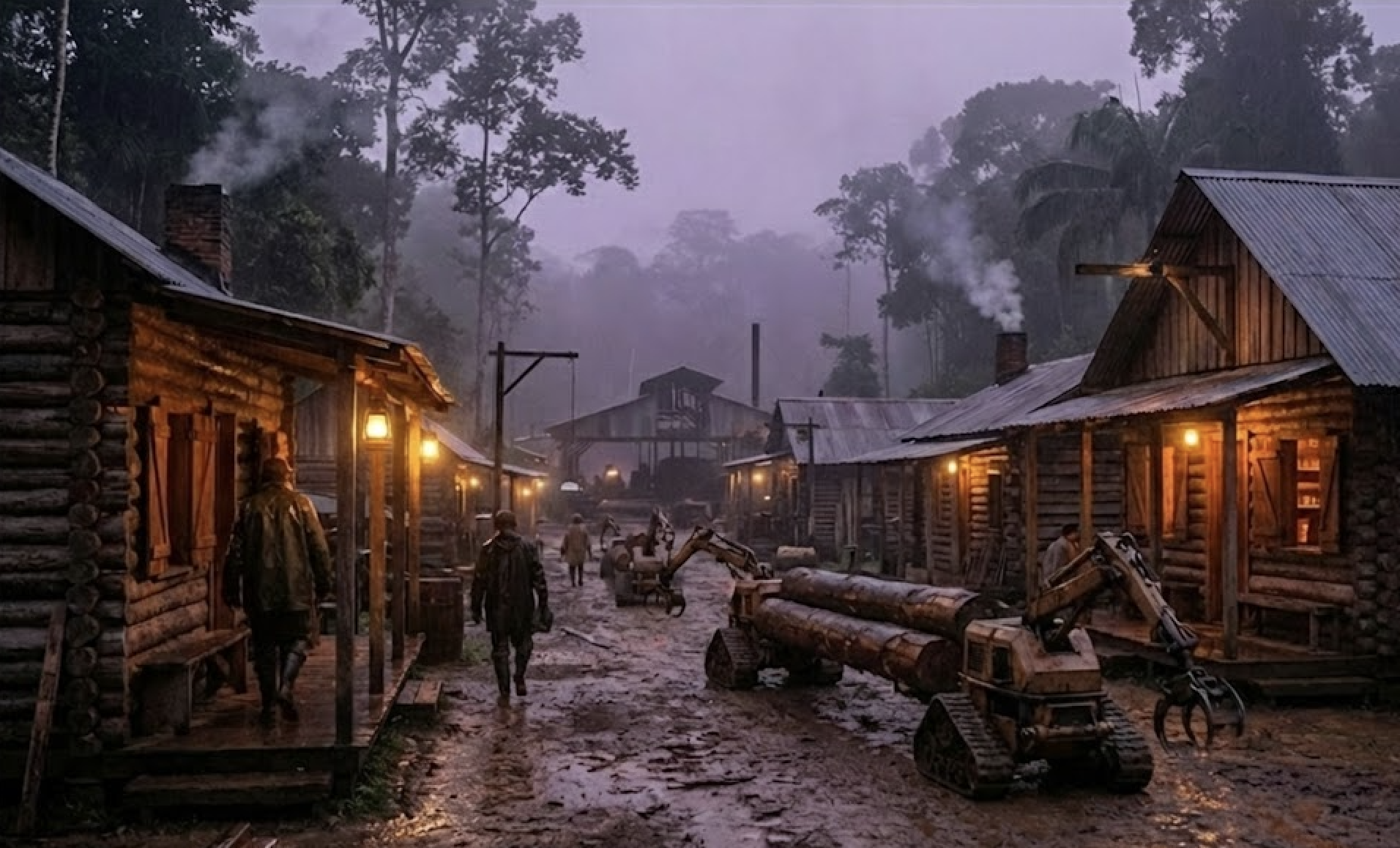
Morningstar’s design retains the ring-shaped structure of the HSP but embodies the settlement’s pioneer spirit, reflecting its role as a central hub for the timber industry.
- Material Use: Houses were constructed using wood and stone sourced locally, reminiscent of the log cabins of Earth's “Wild West.”
- Architectural Style: The settlement’s buildings, with their rustic charm and simple functionality, evoke the resilience and resourcefulness of Earth’s early pioneers. This aesthetic aligns with Morningstar’s identity as a timber hub and a reminder of humanity's adaptive nature.
Hope: The Outlier
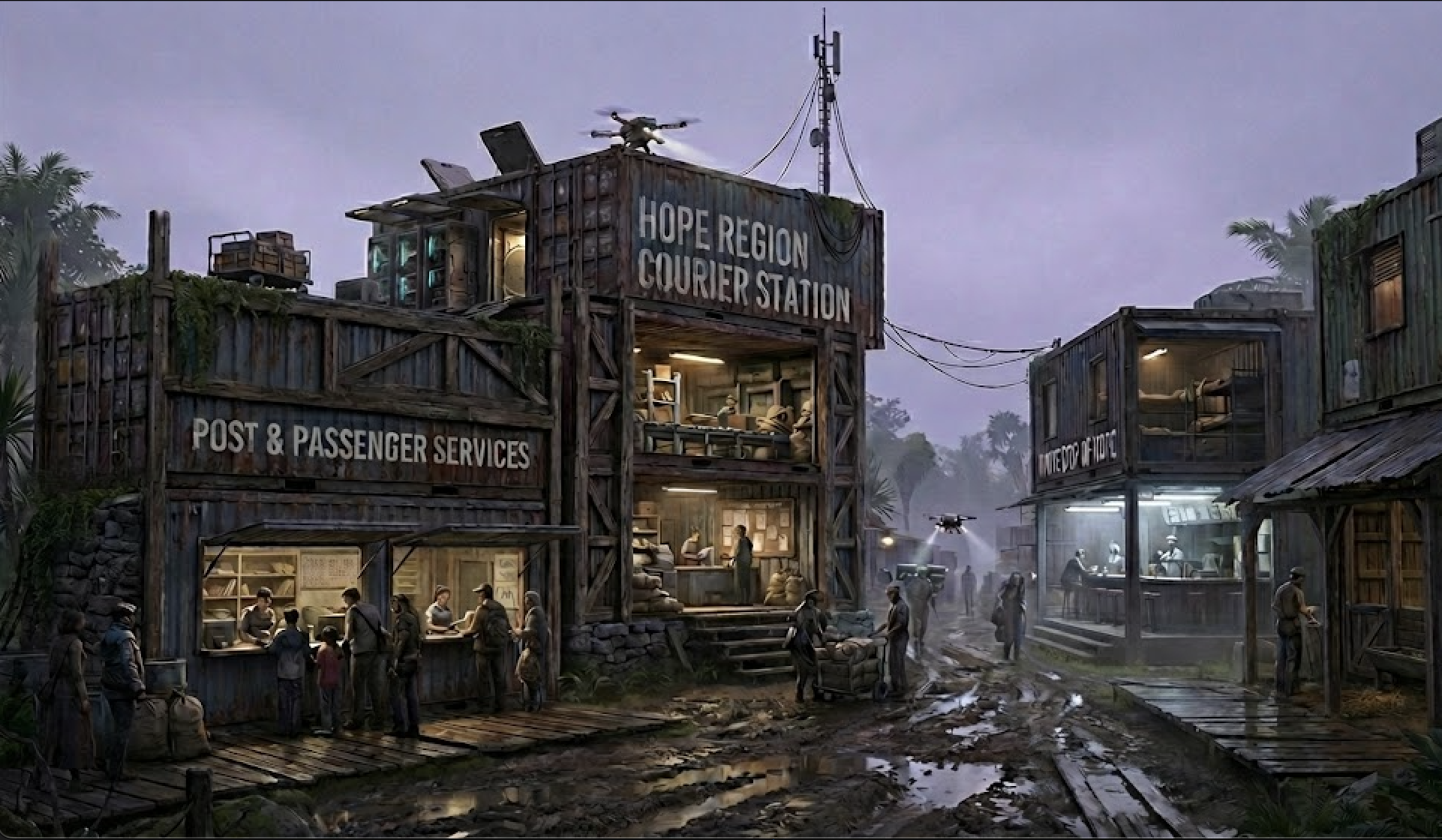
Hope stands apart as the only major settlement not structured according to the HSP. Originally intended as a farming region rather than a formal settlement, Hope’s development diverged from the plan.
- Agricultural Focus: Initially designed to support large-scale farming and food production, Hope lacks the centralized, ring-shaped structure typical of HSP settlements.
- Organic Growth: Over time, as Hope’s role expanded to include cattle ranching and grain processing, it organically grew into a community with its own unique layout. This unplanned development highlights the adaptability of human settlers in responding to unforeseen needs.
- War and Energy Crisis: Hope’s reliance on agricultural development made it one of the few settlements that could sustain itself during the Beta Age’s energy crisis. However, after the sabotage of QFB charging infrastructure, farming became significantly more difficult due to power constraints.
Conclusion
The HSP’s influence is evident in the foundational layout of Beta Age settlements, but its limitations — both technological and ideological — quickly became apparent. While settlements like New Kourou and Morningstar reflect the plan’s ideals, others like Hope underscore the adaptive, pragmatic spirit that ultimately ensured survival. The plan’s rigid assumptions and failure to anticipate coexistence with an indigenous population led to its eventual abandonment, but its imprint remains in the early structure of ExoHuman civilization on VOI 700 D.