
Table of Contents
Major Planetary Zones | (Twin) Sections of the Habitual Belt | Regions | Geographic Features
LAKE ORLANDA
- Type: Lake
Overview
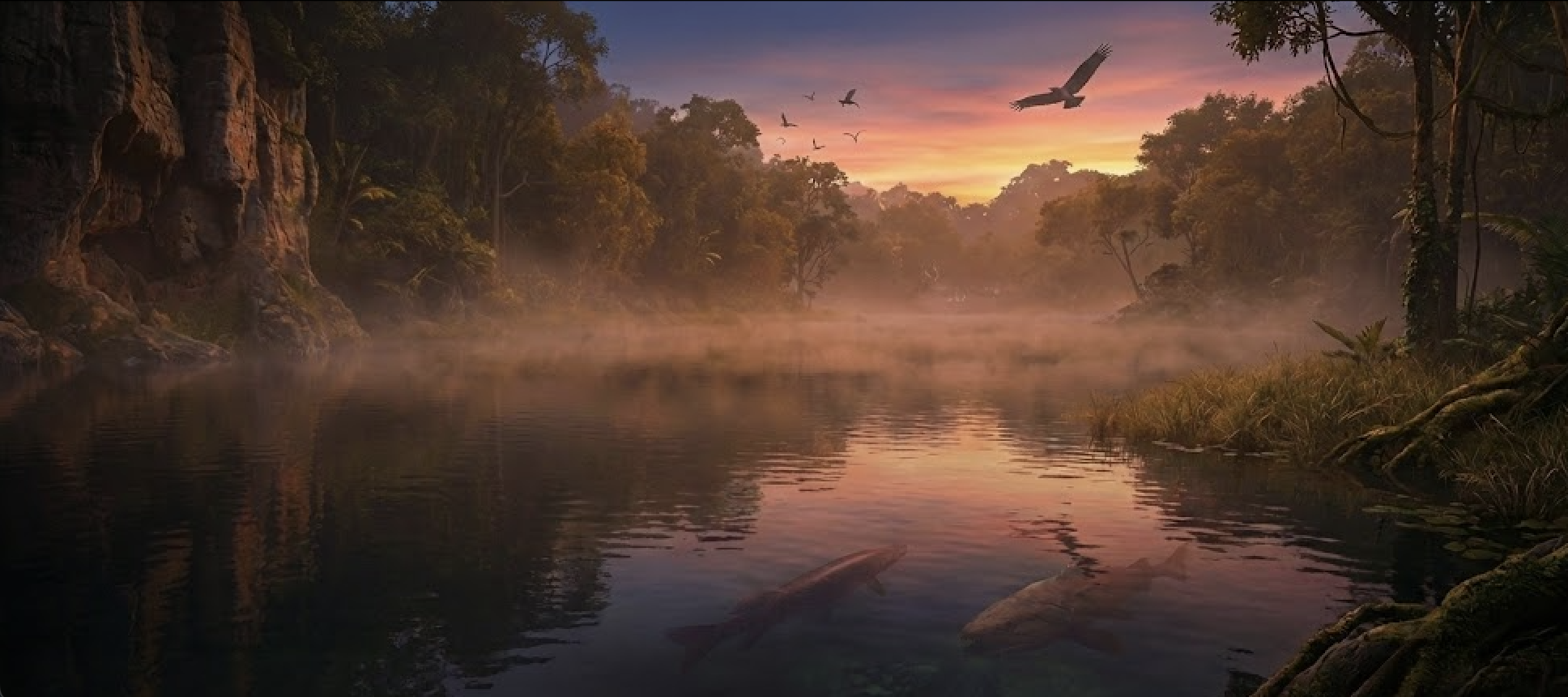
Lake Orlanda, one of the three major lakes in the Asari Region, is a unique and enigmatic feature of the Eastern Equatorial Section of the Habitual Belt on VOI-700 D. Though the smallest of the trio, with a surface area only a quarter of the width of Lake Arla, Lake Orlanda is the deepest. Its mysterious underwater caves and uncharted depths have given rise to countless legends and cultural significance among the Native Tribes, particularly the Orlanda.
Native Tribes have a saying: “The deepest secret of all lies at the grounds of Lake Orlanda,” a sentiment that underscores the lake’s spiritual and mythological importance.
Local Climatic Conditions, Geography and Landscape
- Location and Size: Lake Orlanda is situated in the northern part of the Asari Region, 20 km south of the Orlanda Marshes. Though smaller in surface area compared to other lakes in the region, it reaches an impressive depth of more than 400 meters (estimated), making it the deepest freshwater body in the Habitual Belt.
- Hydrology: The lake is primarily fed by the Orlanda River, which delivers freshwater from the Atrana Mountains. Mineral-rich runoff from the surrounding hills also contributes to its unique ecological makeup.
- Shoreline Features: The northern and eastern shores are covered with dense forests, while the southern edge gives way to rocky cliffs. The western shore consists of fertile grasslands that support grazing animals and agricultural activity.
Weather Patterns:
- Stable microclimate due to surrounding terrain
- Regular rainfall
- Frequent dense fog banks form over the lake due to the stable microclimate and water-air temperature differentials
Local Flora
All known Exohuman data on the flora of Lake Orlanda stems from brief expeditions conducted during the early Beta Age. Given the cultural sensitivity and spiritual significance of the lake to the Orlanda Tribe, detailed biological studies were extremely limited. In the Gamma Age, the Peace Treaty prohibits any further exploration or resource usage by Exohumans, preserving the lake’s untouched state and mystique.
- Shoregrass – Hardy grasses along the northern shore
- Glowvines – Luminescent vines draping from trees along the eastern shore, used by the Orlanda for ceremonial decorations.
- Cavemoss – A rare moss found near the rocky southern shore, said to glow faintly underwater, adding to the legends of the lake’s mysterious depths.
Local Fauna
Similar to the flora, all known Exohuman data on the fauna of Lake Orlanda comes from a short exploration window during the Beta Age. It is highly likely that many animal species remain undocumented. In the Gamma Age, the Peace Treaty forbids further biological exploration by Exohumans.
While most documented species are unique to Lake Orlanda, there is scientific consensus that some aquatic species from the inflow zones of Lake Arla — particularly Ironjaw Minnows and Silverscale Gliders — may inhabit the Orlanda River and its confluence with Lake Orlanda.
Depth-Adapted Species:
- Deep-Orlanda Pike - Large, depth-adapted predatory fish that inhabits the unexplored lower strata of Lake Orlanda.
- Cavern Perch - Large, deep-dwelling freshwater predator endemic to the underwater cave networks of Lake Orlanda.
Twilight-Reactive Fish:
- Mirrorstripe Loach - Slender, twilight-reactive fish native to the densely vegetated shallows and mid-depth zones.
- Shatterjaw Bream – Robust, twilight-reactive fish species native to the mid-depth and shallow zones of Lake Orlanda. It is named for its powerful jaw structure.
Mineral-Feeding Fish (Inflow Zones):
- Ironjaw Minnow - Small, mineral-feeding fish native to the inflow zones of Lake Orlanda.
- Silverscale Glider – Sleek, surface-skimming fish species native to the faster-moving currents of the Orlanda River inflow into Lake Orlanda.
Aquatic Invertebrates:
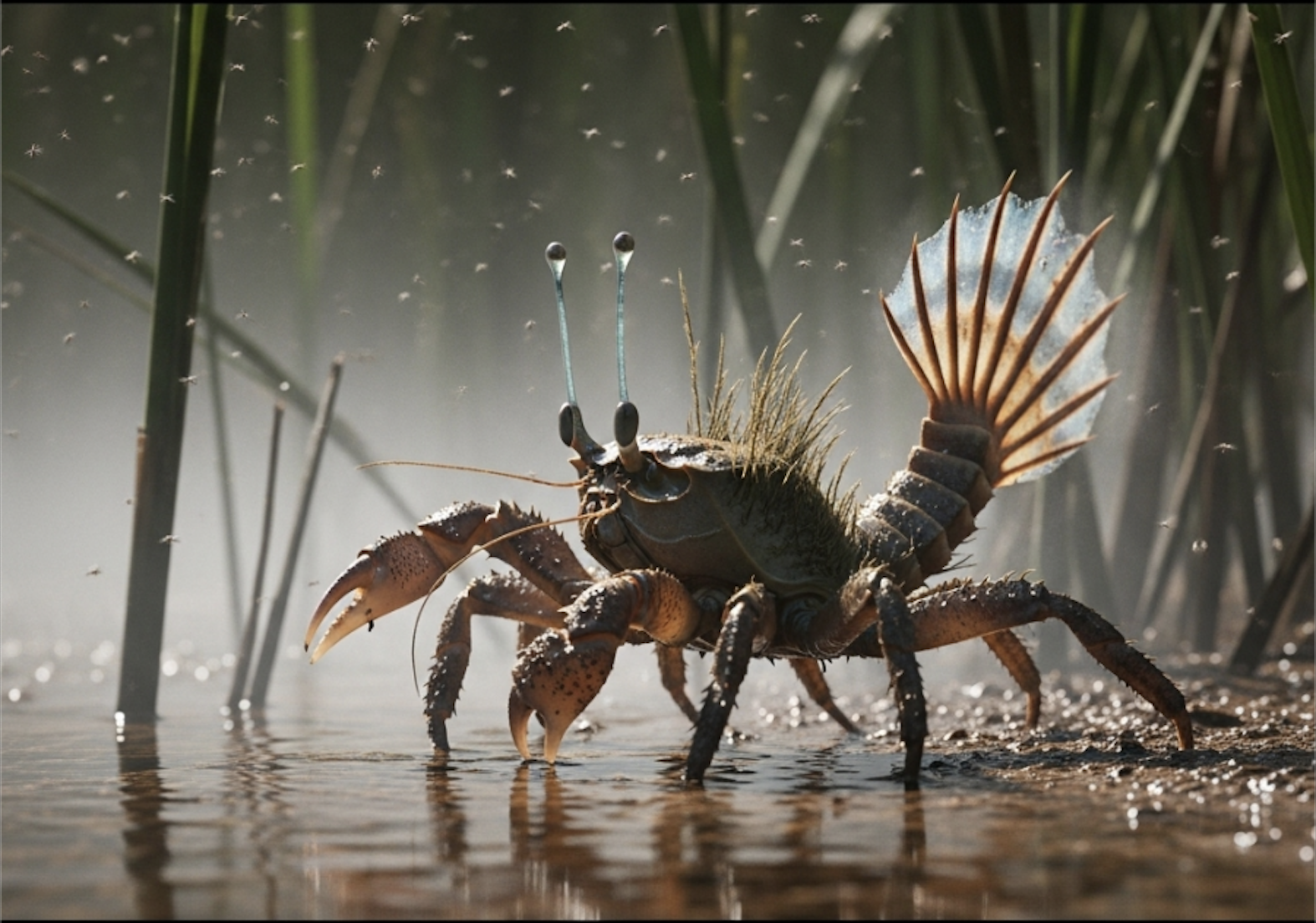
- Misttail Crab – Semi-aquatic crab with translucent shells, thrives in rivers and lakes across the Asari Region.
- Hollowback Scuttler – A cave-dwelling freshwater crab found only in Lake Orlanda’s deep cliffside pools.
- Spireclaw Wader – A long-legged aquatic scavenger known for its aggressive defense and rapid darting movements.
Surrounding Fauna:
- Arr – colossal bird of prey, renowned for its unparalleled speed, razor-sharp vision, and precision hunting tactics
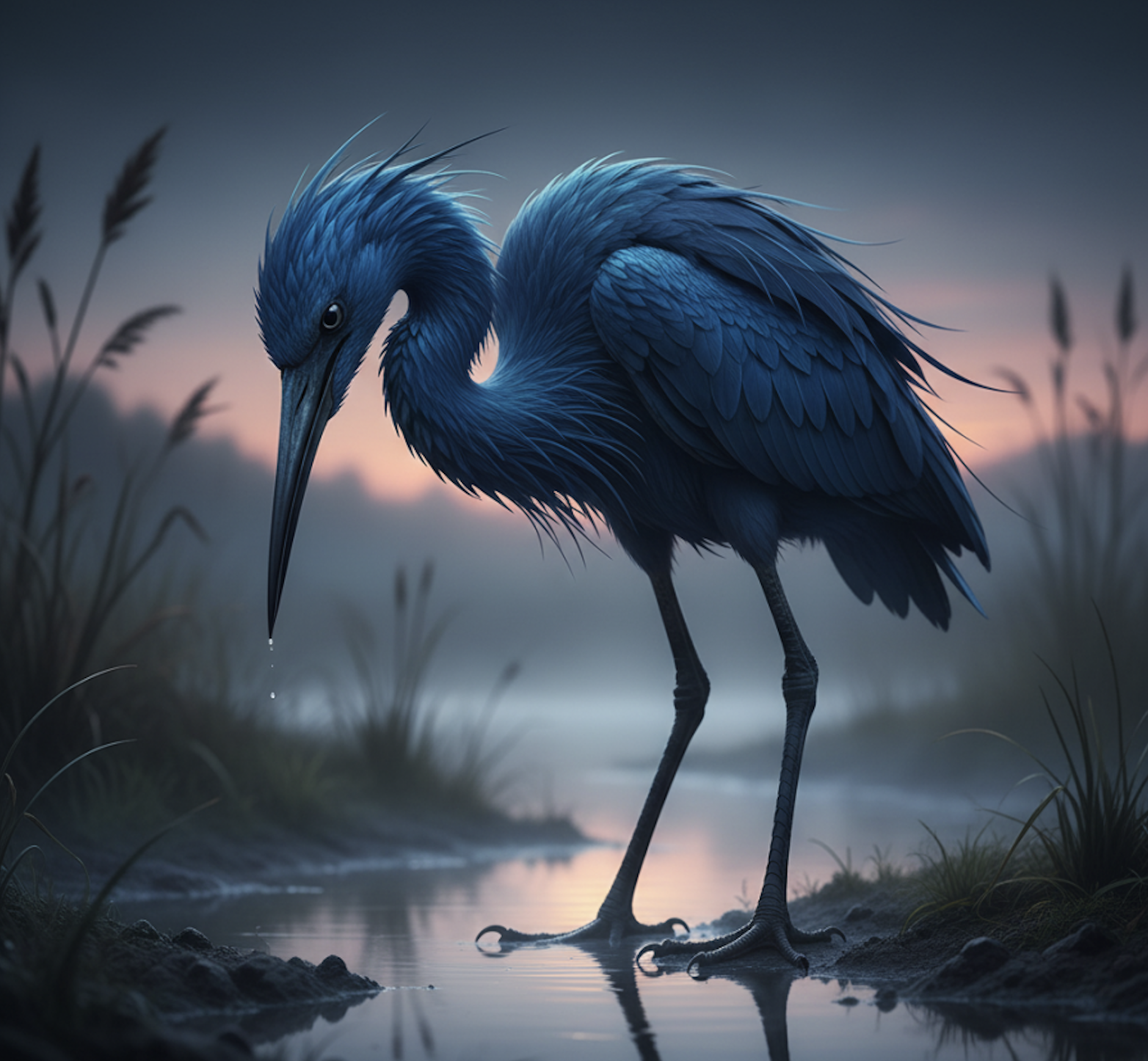
- Bluestrike Heron: A tall bird with striking electric blue plumage that hunts for fish and amphibians along the riverbanks.
- Flutterwing – small, swift bird, recognized for its vibrant blue and gold plumage
- Iri-Tenu – small, highly adaptable beetle species native to the forests and shoreline of Lake Orlanda
- Nokari Mouse – Small, fur-insulated rodent.
Local Population and Settlement History
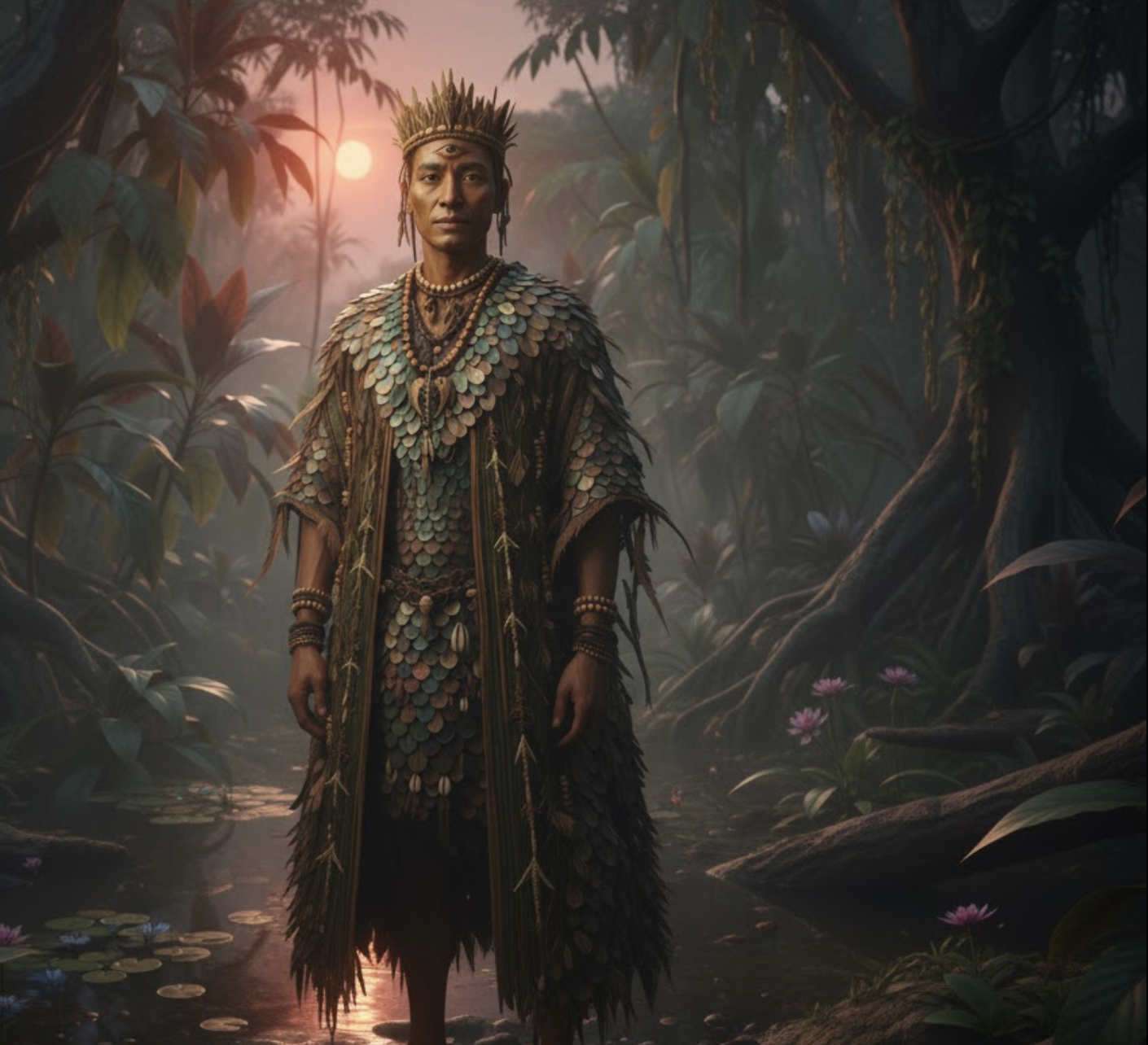
Lake Orlanda and the surrounding Orlanda Marshes are the ancestral territory of the Orlanda Tribe. Their spiritual and cultural connection to the lake is deeply rooted in their belief systems, and the region remains a sacred boundary within their traditional lands.
In the Beta Age, Exohumans attempted to expand their presence in the Asari Region as part of the Human Settlement Plan. One such endeavor was the establishment of Fisherpoint, a fishermen’s settlement on the northern shore of Lake Orlanda. The settlement was intended to capitalize on the lake’s abundant aquatic resources and provide a strategic foothold for further exploration of the Habitual Belt.
However, Fisherpoint never evolved into a fully realized settlement. It remained a construction site with provisional infrastructure when tensions with the Orlanda Tribe escalated. The Orlanda, viewing the project as a direct violation of their sovereignty and sacred lands, issued an ultimatum demanding the immediate withdrawal of Exohuman settlers.
The Battle of Fisherpoint
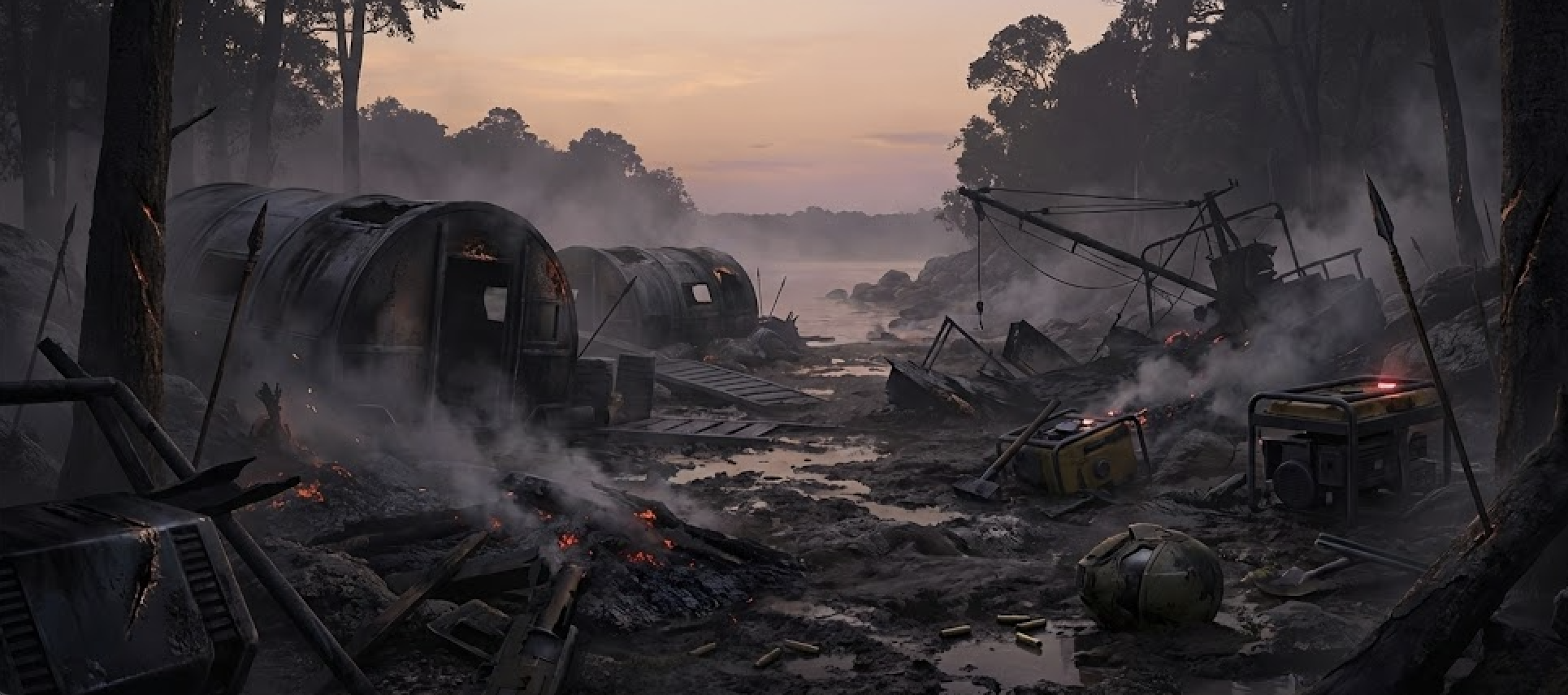
Tensions escalated rapidly, and two months before the outbreak of the Great War, the Orlanda Tribe launched an attack on Fisherpoint with a force of 1,000 warriors armed with their iconic Orlanda Spears. Despite being outnumbered, the Exohuman settlers, numbering only 90, attempted to defend the settlement with Windstrike Rifles and the Laser Guns of the two local Guarding Troopers.
The battle was fierce but short-lived. The Orlanda overwhelmed the Exohumans, killing or capturing the majority of the settlers. The settlement of Fisherpoint was burned to the ground, and the surviving Exohumans fled to the nearest stronghold. Nearly all 90 settlers were killed, while the Orlanda lost approximately 250 warriors.
Consequences
The destruction of Fisherpoint became a pivotal moment in the Beta Age. It not only marked one of the first violent confrontations between Native Tribes and Exohumans but also solidified the Orlanda Tribe’s alignment with the Alliance of Native Tribes. The incident highlighted the cultural tensions that fueled the eventual outbreak of the Great War
Tactical Advice for Dungeon Masters
The Lake Orlanda setting offers opportunities for atmospheric exploration, political drama, and ancient mystery.
Adventure Hooks – Beta Age:
- “The Depths of Defiance” – Players assist in defending or sabotaging the Fisherpoint settlement as tensions rise between the settlers and the Orlanda Tribe.
Adventure Hooks – Gamma Age:
- “Submerged Secrets” – A rogue researcher recruits the players to sneak into the lake’s depths, defying the Peace Treaty in search of a long-lost artifact from the Orlanda myths.
Related Pages and Further Information
The three Mayor Lakes of Asari: