Table of Contents
Races | Culture
EXOHUMAN SETTLEMENT & HOUSING IN THE BETA AGE
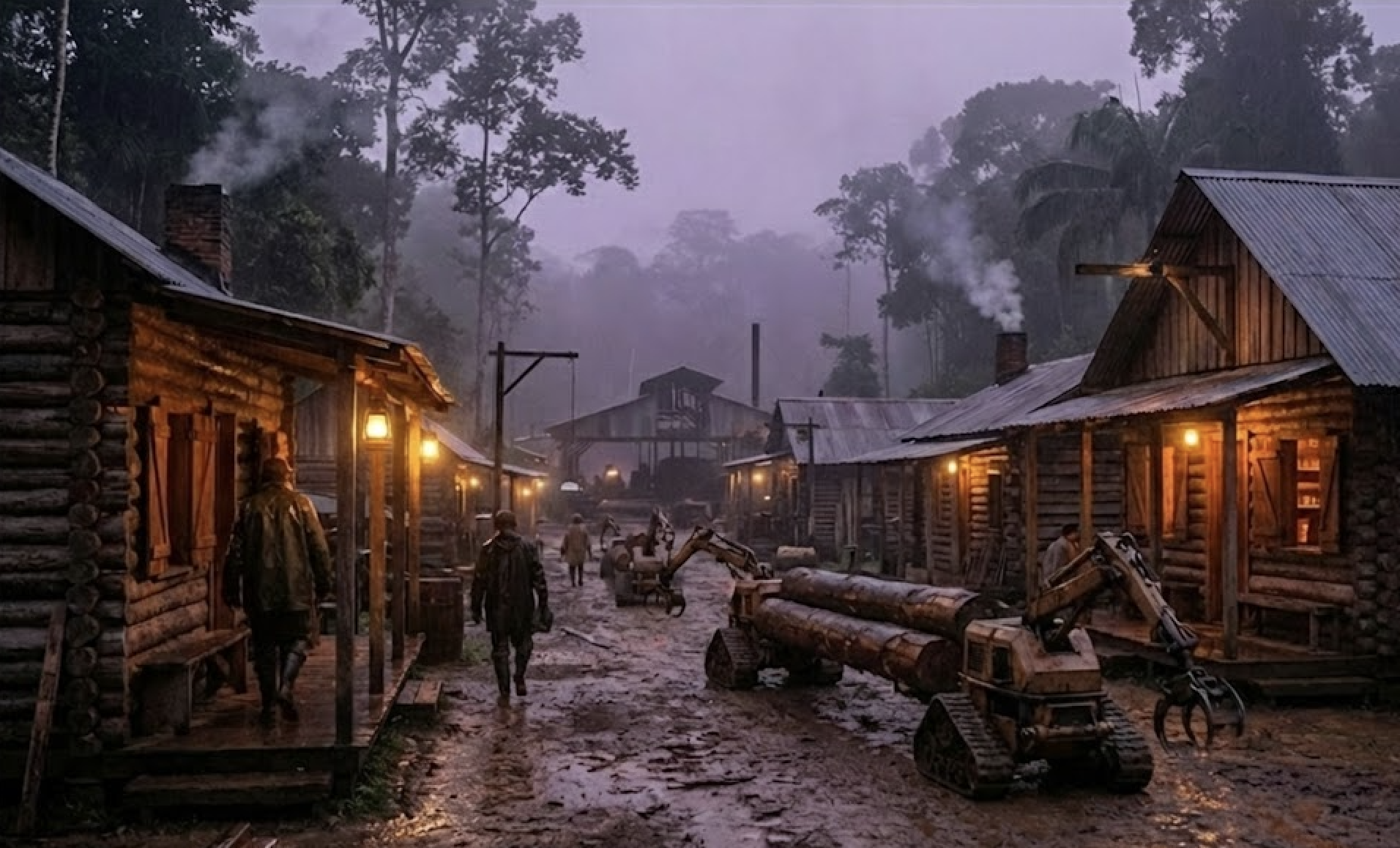
Overview
During the Beta Age, the settlement of VOI 700 D was characterized by individual autonomy, private land ownership, and a free-market-driven housing system. The Human Settlement Plan (HSP), ratified in 2625, served as the legal and ideological foundation of ExoHuman colonization. It enabled settlers to claim land and build homes within regulated parameters — primarily in the agriculturally viable Asari Region of the Habitual Belt.
While settlers had the freedom to establish farms on claimed land throughout the Asari Region, the founding of official settlements (such as Hope, Morningstar, or Firetown) required formal approval by majority vote in the Settler’s Council. This distinction reflected the Free State’s goal of keeping the population within protected zones where infrastructure and security — especially from the Guarding Troopers — could be ensured.
The Free State of Settlers acted as the governing authority during this era. Its institutional backbone included both the Settler’s Council and specialized administrative bodies like the Land Allocation Office.
The Human Settlement Plan (HSP)
he Human Settlement Plan (HSP) was the legal framework for land distribution and early colonization. It was administered primarily through the Land Allocation Office, which operated from its headquarters in New Kourou and served as the official registrar for land ownership:
- Every adult settler could claim 65 hectares of farmland if they committed to working the land for at least ten years.
- Claimants were required to pass a practical agricultural skills test to ensure sustainable use of the land.
- Non-farming settlers received increased startup capital instead, enabling them to establish service-based businesses or pursue employment within established settlements.
The Land Allocation Office organized weekly public lotteries, assigning plots from a central map database. These lotteries determined the order in which eligible settlers could choose available parcels within the Asari Region.
To protect the integrity of the Free State’s legal jurisdiction and ensure settler safety, the Settler’s Council restricted land distribution to the Asari Region only. While other parts of the Habitual Belt also featured fertile terrain, they were excluded during the early colonization phase due to the difficulty of securing distant zones and the limited reach of law enforcement. Remote expansion was seen as too risky, especially with growing tensions between settlers and Native Tribes. Additionally, the Ralar Region on the Dark Side and the Desert Side were deemed entirely unsuitable for agriculture due to extreme climate conditions, a lack of reliable water sources, and logistical inaccessibility.
Housing & Settlement Culture in the Beta Age

Housing culture in the Beta Age was shaped by two main constraints: personal initiative and regulatory boundaries. The Human Settlement Plan clearly outlined where and how settlers could build:
- Private Homeownership: Settlers had the right to design and construct their own homes, but only within the Residential Ring Zones of officially recognized settlements, or on their designated farmland.
- Private Enterprise Encouraged: In settlements, this often led to the emergence of mixed-use buildings where families combined living quarters with small businesses, trading posts, or workshops.
The Settler’s Council and local security forces were responsible for enforcing these zoning regulations. Unauthorized dwellings or squatter outposts were occasionally dismantled or brought into compliance through negotiation or fines.
Resource Scarcity & Construction Limitations
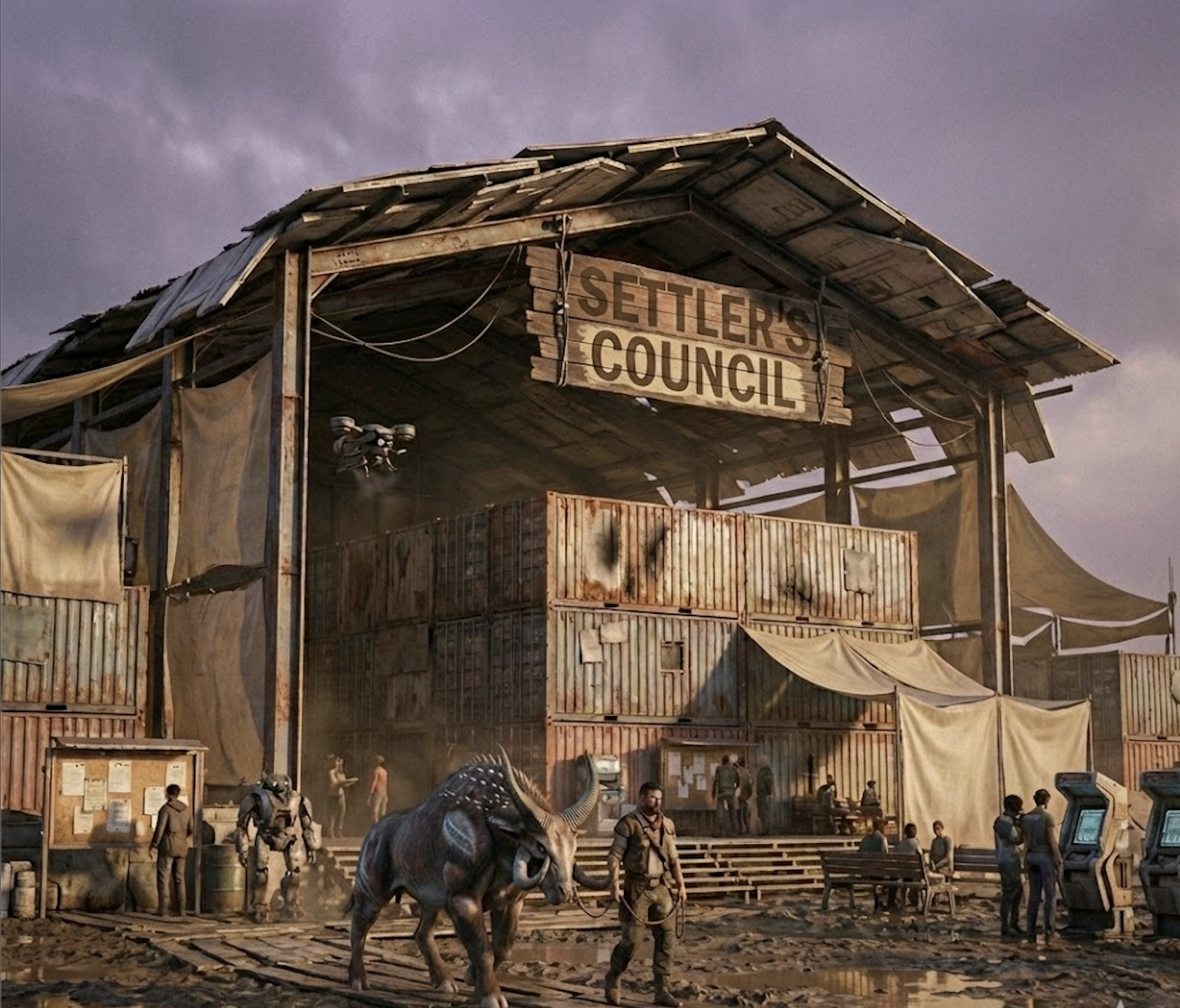
While settlers had complete freedom in designing their homes, resource scarcity following the crash landing of the Last Frontier placed strict limitations on construction methods:
- New Kourou settlers had access to salvaged spaceship materials repurposing hull fragments, bulkheads, and wiring for buildings.
- Settlers in remote areas relied on natural materials, such as stone and wood, due to the lack of industrial infrastructure.
- Energy constraints made it impossible to develop high-tech housing solutions. Instead, settlers built simple but functional homes.
The settlement landscape reflected these constraints, with New Kourou’s industrial aesthetic contrasting sharply with the more rustic, resourceful constructions of rural homesteads.
The Impact of the Great War on Housing
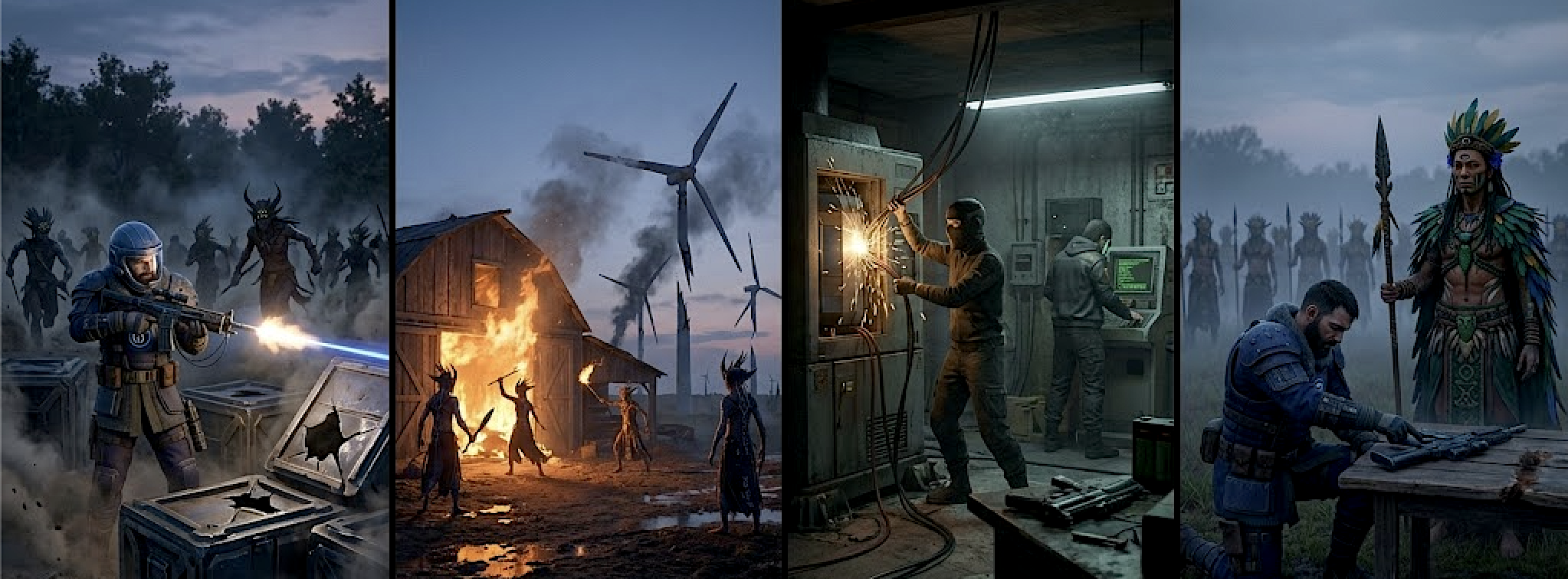
The Great War (2629–2632) devastated ExoHuman settlements, forcing an abrupt end to private land ownership:
- Rural Settlements Abandoned: Many farms, homesteads, and trading posts were either destroyed or left uninhabitable.
- Industrial & Urban Damage: New Kourou and other major hubs suffered severe structural damage.
- Loss of Land Ownership: The Peace Treaty (2631) revoked all private land ownership, forcing survivors into the newly designated ExoHuman reservations.
By the war’s end, ExoHumans were no longer free to settle or travel as they wished. The new Federal Confederation introduced a state-controlled housing system, marking the transition from private ownership to centrally planned accommodation under Communardism.
Tactical Advice for Dungeon Masters
- Frontier Conflicts: Create missions where players must mediate disputes between settlers and Native Tribes before the war.
- Land Rush Events: Simulate the lottery-based land selection process, giving players a stake in early settlement expansion.
- Building & Survival Challenges: Test players' ability to construct and maintain homes under Beta Age conditions.
Related Pages and Further Information
The Ages of the Exohuman history: