
This is an old revision of the document!
Table of Contents
Hunting an Unknown Hunter
CASE RESOLUTION AND DISCOVERABLE BACKSTORY
Purpose of This Page
This page is DM-facing only.
It reveals the complete underlying truth of the case: who J.W. is, who the Nameless Man was, why the Blues matter, and why the violence around Morningstar is not chaotic — but curated. Players are not meant to receive all of this information in play.Instead, fragments are uncovered through investigation, interrogation, escape, judgment, or failure. Use this page to:
- Answer player questions consistently
- Decide what J.W. will reveal (and what he will not)
- Resolve moral, political, and cultural consequences after the Realm
- Understand why no ending is clean
The Core Truth (DM Summary)

Jareth Wyrick — “J.W.” — is a Blue. He is not a sadist, not a madman, and not a hunter in the traditional sense. He is a survivor who chose control over exposure. Everything that happens in this adventure is the consequence of that choice.
The Blues and the Origin of the Pattern

The Blues were unregistered stowaways who lived hidden inside the maintenance strata of the Last Frontier for over 200 years. They survived through secrecy, silence, and adaptive invisibility. They had:
- no legal identity
- no education
- no concept of rights
- no future beyond survival
Their culture taught one absolute truth: Visibility equals death. J.W. was born into this culture as “7.” A number, not a name.
Day Zero and the Theft of a Life
On Day Zero (2625), the Last Frontier crash-landed on VOI 700 D. In the chaos:
- thousands died
- authority collapsed
- records fractured
Two days after the crash, 7 found a corpse in the jungle. The man was his age, legally registered and dead from a single gunshot His name was Jareth Wyrick. 7 took the documents. Then he burned himself — deliberately — to erase his original face. From that moment on:
- 7 ceased to exist
- Jareth Wyrick survived
Silence became his shield. Writing became his voice. Control became his religion.

The Nameless Man (Blue 14)
The Nameless Man was Blue 14.
He was not just another stowaway — he was 7’s kin by necessity, a protector, guardian, and parent-figure shaped by the harsh logic of life in the maintenance strata. To J.W., 14 was: - the one who kept him alive when he was still “7” - the closest thing to family he ever had - a living link to a past he was trying to erase
As years passed, 14 developed progressive dementia. He wandered. He forgot.He fled. J.W. hid him. Then confined him. Then imprisoned him — “for his own good.” But 14 escaped. He was found disoriented and freezing in the Ralar Region and detained by Guarding Troopers for his own safety.
For J.W., this was catastrophe. Exposure was no longer hypothetical.
The Central Crime
J.W. decided that 14 had to die. Not out of hatred. Out of fear.
He orchestrated the following: - A forged operation via a hidden Hand - An OfSO mandate to extract the Nameless Man - A contingency to erase *everyone involved*
The PCs were never meant to return. The erasure was meant to be clean. Procedural. Final.
The Realm and the Blues
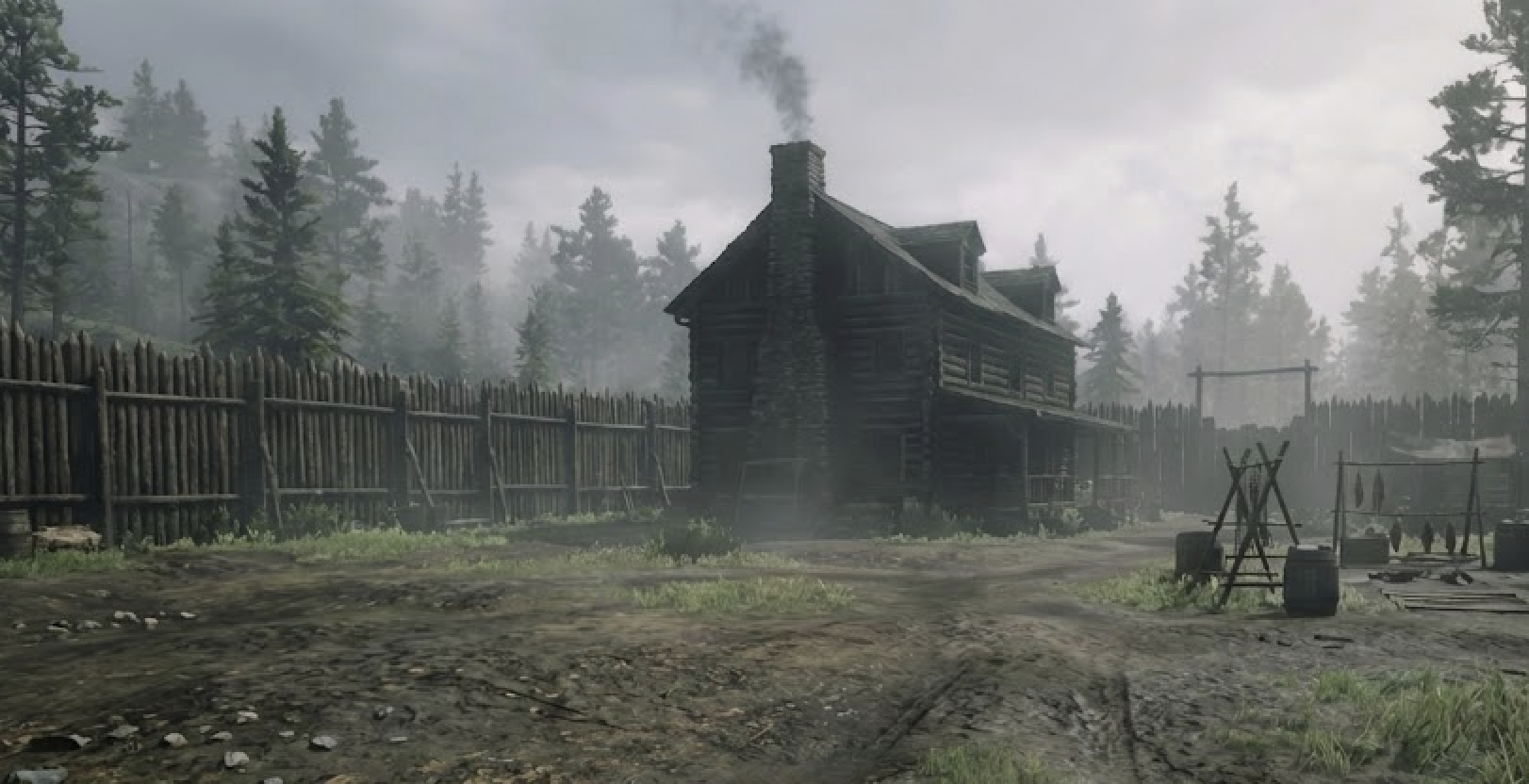
J.W.’s fenced property is not a farm. It is a containment system. The huts exist to house Blues who submitted to his control:
- food - shelter - safety
In exchange: - silence - obedience - disappearance
Blues who refused were killed.
J.W. justified this as necessity: Uncontrolled Blues were a risk to the secret. Risk meant extinction.
In trying to protect his people, he became their executioner.
The Irony of Freedom
J.W. wanted: - wealth - respect - legitimacy - freedom
Instead, he built: - walls - patrols - procedures - fire pits
He escaped the darkness — and rebuilt it around himself.
By the time the PCs arrive, J.W. is: - wealthy - untouchable - feared
And utterly trapped.
What J.W. Will Admit
If pressed successfully, J.W. may confirm: - that the Nameless Man was his responsibility - that erasure was ordered to protect a secret - that the Blues exist - that the system still functions beyond him
He will never: - ask forgiveness - express regret - justify himself morally
J.W.’s System of Control

Jareth Wyrick does not operate alone. What appears from the outside as a solitary hunter is, in reality, a layered system designed to separate visibility from truth.
The Hands (Outer Layer):
J.W. employs former settlers, ex-convicts, outlaws, and social outcasts as his visible representatives beyond the walls of his property. These men and women are paid well, protected when useful, and disposable when not. Each Hand swears personal allegiance to J.W. — not to a cause, ideology, or community. Loyalty is enforced through dependency: money, shelter, and the promise of exclusion from Guarding Trooper scrutiny.
The Hands serve as:
- errand runners and intermediaries
- enforcers and escorts
- hunters who can act openly without raising suspicion
To outsiders, they are the system. J.W. himself remains distant, unnamed, and mythologized.
The Blues (Inner Layer):
Within the walls of J.W.’s property live the remaining Blues — former stowaways from the Last Frontier and their descendants. Unlike the Hands, they are never meant to be seen. The Blues perform all internal operations:
- trapping and maintenance of hunting infrastructure
- fur processing and preparation
- internal security and containment
They do not leave the property. They do not speak to outsiders. They do not exist — officially.
For J.W., this serves two purposes:
- 1. Secrecy: The Blues cannot expose him, because exposure would expose themselves.
- 2. Control: Shelter, food, and survival are conditional on obedience.
What J.W. tells himself is that he saved them. What the system reveals is that he contained them.
The Logic Behind the System:
J.W.’s structure mirrors his own life trajectory:
- the Hands represent the life he wants — legitimacy, trade, movement, power
- the Blues represent the life he escaped — invisibility, dependency, fear
By keeping the two groups separate, J.W. believes he has solved the problem of his own existence. In truth, he has reproduced it. His realm is not a sanctuary. It is a scaled-up version of the maintenance decks of the Last Frontier — with better walls, better tools, and the same silence.
Resolution Paths
The case can end in multiple valid ways:
- Execution of the PCs: The truth dies with them. The system continues.
- Escape without proof: J.W. remains. The pattern persists.
- Killing J.W.: The system fractures — but does not vanish.
- Proof delivered to Ezrah: Political consequences follow. Justice becomes bureaucratic.
- Proof delivered to the Honga: Balance is restored — violently or ritually.
None of these are clean victories.
DM Guidance
This is not a mystery about what happened. It is a story about: - how fear creates systems - how secrecy becomes violence - how survival turns into domination
J.W. is not the monster. He is the result.
And the question the players must answer is not: “Did we stop him?” But: “What do we do with the truth now?”