
This is an old revision of the document!
Table of Contents
Exohumans | NPC
JARETH WYRICK (J.W.)
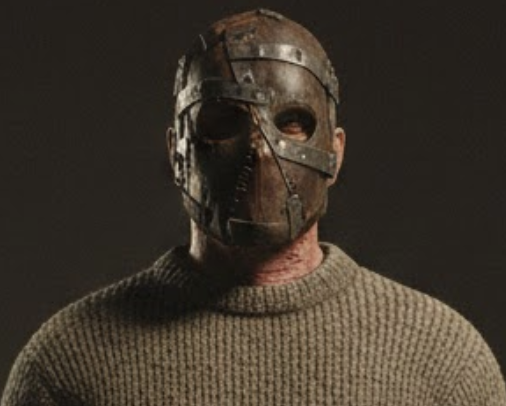
Game Master Note: The public figure known as Jareth “J.W.” Wyrick is not the registered passenger who originally bore that name. This article distinguishes the public biography from the hidden history of Blue Number 7.
Identity and Faction
- Species: ExoHuman
- Born: 2581, aboard the spaceship Last Frontier, as an unregistered Blue
- Original Identity: Blue Number 7
- Assumed Identity: Jareth Wyrick, taken after Day Zero
- Public Role: Northern manufacturer, landholder, and community benefactor
- True Role: De-facto leader of the surviving Blues; employer of Hands, Trappers, and convicted outsiders
- Place of Residence: Wyrick Estate and Manufactory, on the lower slopes of the Atrana Mountains, approximately ten kilometers north of Morningstar
Public Profile
Across the northern Free State, the name J.W. is associated with expensive pelts, durable cold-weather clothing, and a distribution network that reaches settlements far beyond Morningstar. His manufactory supplies tagged consignments to Hale & Hook Outfitters, whose contracted road sellers carry his goods to taverns, markets, work camps, and remote settlements throughout the country.
The approximate location of the Wyrick Estate is not a secret. Freight traffic follows the northern road to a guarded compound on the lower mountain slopes. What happens beyond its gates is another matter. J.W. does not receive ordinary customers, rarely appears in public, and conducts almost all business through Hale & Hook or through representatives known as his Hands.
According to the official biography, Wyrick served aboard the Last Frontier as a materials-recovery and landing-logistics coordinator. He lost his family and suffered devastating burns during the crash. Grief, disfigurement, and damage to his voice supposedly explain why he withdrew from former acquaintances, abandoned the use of his first name, and rebuilt his life in the North under the initials J.W.
In Morningstar, he is also known as a major benefactor. His best-known contributions include:
- The Darkward Allocation Network: Vouchers for hot meals, preserved food, lamp fuel, heat cartridges, medicine, and thermal clothing for people travelling toward or working near the permanently frozen Dark Side.
- Darkward Waystations: Shelters and emergency caches stocked along northern routes with food, fuel, signal equipment, and basic medical supplies.
- The North Road and Bridge Fund: Repairs that serve Morningstar and the surrounding work camps while also keeping J.W.’s own freight route open.
- Medical Support: Supplies and financial assistance for hunters, trappers, and loggers injured in the northern wilderness.
The aid is real and has saved lives. Crates, vouchers, and public plaques commonly bear the slogan:
THE NORTH LOOKS AFTER ITS OWN — J.W.
This public record makes J.W. difficult to regard as an obvious villain. To many residents of Morningstar, he is a scarred survivor who turned personal loss into prosperity and then shared part of that prosperity with the North.
The Real Jareth Wyrick
The real Jareth Wyrick was a registered passenger of approximately the same age and build as Number 7. He was a reserved family man who worked in the Fabrication and Reclamation division of the Last Frontier as a materials-recovery and landing-logistics coordinator.
GAIA calculated demand, maintained inventories, scheduled nanoforge production, assigned daily tasks, and coordinated Service Bots. Wyrick did not decide routine allocations. He supervised the human and physical side of that system: inspecting damaged stock, coordinating repair and reclamation work, overseeing technicians and Service Bots, preparing tools and emergency reserves for the landing, and training human crews to operate essential processes once the passengers could no longer depend upon a fully automated starship.
Where GAIA produced the plan, Wyrick helped people and machines carry it out. His name appeared on digital requisitions, reclamation reports, and landing manifests, making it familiar to many passengers who had never met him personally. Colleagues remembered him as quiet, practical, and stubbornly fair—a man with a habit of finding a use for things others had written off.
Wyrick and his immediate family died during Day Zero. Their deaths left no close relative able to challenge the identity later claimed in his name.
Number 7 and the Blues
Number 7 was born in the maintenance strata of the Last Frontier and spent roughly forty-four years of his life beneath the society of the registered passengers. Like the other Blues, he descended from stowaways who had survived for generations inside service decks, vents, recycling chambers, and disposal corridors—unregistered, unseen, and excluded from the comfort enjoyed on the upper decks.
Number 14 was Seven’s kin by necessity: protector, guardian, and parent figure. Fourteen kept him alive, taught him the harsh logic of the maintenance strata, and became the closest thing to family Seven ever possessed.
Seven’s anger was never merely a desire for personal revenge. He believed that the Blues had spent generations maintaining a civilisation that denied their existence. He wanted them to emerge from the shadows as an independent people who would never again have to hide, beg, or live beneath the “Others.” In time, the desire for equality became a demand for superiority—and the conviction that only Seven could guarantee it.
Day Zero and the Stolen Identity
The thermal catastrophe in the maintenance strata left Seven catastrophically burned. His face, hands, throat, and identifying features were badly damaged. Fourteen carried him out of the wreckage and kept him alive long enough to reach the provisional survivor stations.
During the chaos, Fourteen recovered the identification of the dead Jareth Wyrick. To obtain treatment for Seven without exposing the surviving Blues—or risking his exclusion from scarce medical care—Fourteen presented him as the registered passenger named on those records. The two men were close enough in age and build, while Seven’s burns, damaged voice, fragmented survivor registries, and the deaths of Wyrick’s family made immediate verification impossible.
The deception began as an act of survival. It was not originally a plan for wealth or power. Once Seven recovered, however, he understood what the identity offered: legal existence, access to land, institutional protection, and the authority of a name already associated with reliable work. He chose not to surrender it.
Trauma explained every discrepancy. The burns explained his altered face and hands. Damage to his throat explained his silence. Grief explained his refusal to meet former colleagues or discuss his family. He began using only the initials J.W. and moved north, where few people had known the real Wyrick personally.
The identity that Fourteen borrowed to save Seven’s life became the foundation of Seven’s power.
Rise of the Wyrick Estate
Under Wyrick’s name, Seven registered a northern land claim and established an enclosed hunting estate and manufactory. The public credited his success to the logistics experience of the man he impersonated. In reality, the operation was built through the labour and developing craft of the surviving Blues, supplemented by hired hunters, trappers, criminals, and convicted “Others.”
J.W.’s pelts and finished garments reach the public primarily through Hale & Hook. Prices and special commissions are approved through J.W.’s office, but individual tags are prepared by different workers at the compound. His Hands manage contracts, deliveries, security, and punishment. Some Hands are Blues; others are outsiders recruited from outlaw circles or among people with criminal convictions. Their presence allows Seven to conduct violence at a distance and blame illegal operations upon known criminals.
The estate initially promised the Blues safety, work, and a permanent home. Gradually, protection became control. Seven restricted movement, information, property, and contact with outsiders. He made food, shelter, and status dependent upon obedience, watched his own people for disloyalty, and treated dissent as a threat to collective survival. What began as an emancipatory and collectivist project hardened into a paranoid, Stalinist order built around Seven himself.
His public generosity follows the same pattern. Darkward vouchers and relief supplies genuinely help people, but they also function as instruments of patronage. Eligibility can be revoked. Participating merchants depend upon reimbursement. Roads and waystations that serve the public also sustain J.W.’s commercial network. Gratitude becomes loyalty; loyalty becomes dependence.
Seven has therefore stolen more than Wyrick’s name. He has corrupted what the name once represented. The real Wyrick helped human beings remain capable within a transparent system. J.W. has constructed a system in which capability, livelihood, and safety increasingly depend upon him.
Language and Writing
The Blues’ first generation was predominantly French-speaking and never entered the English-speaking culture that developed on the upper decks. Their descendants preserved a compressed Franco-Shipyard dialect shaped by maintenance terminology, coded knocks, and fragments of English copied from shipboard signs.
The Blues possessed no formal written tradition aboard the Last Frontier. Those who learned written Common after Day Zero often copied the forms of old maintenance stencils. This produced recurring gaps where the bowls of letters such as P and R should join their vertical stems.
The distinctive “broken R” found on J.W.’s tags, notes, and records is therefore not proof of one individual hand. It is a shared cultural trace that can connect otherwise unrelated writers to the hidden Blue community.
Personality
- Public Impression: Remote, disciplined, wounded, and generous. His seclusion is widely attributed to grief and disfigurement.
- True Traits: Controlled, calculating, patient, proud, and profoundly paranoid.
- Behavior: Observes more than he acts. When he intervenes, it is deliberate and final. He rarely raises his voice or openly threatens; he expects compliance.
- Values: The survival and elevation of the Blues, absolute control over his domain, secrecy, usefulness, and loyalty as he defines it.
J.W.’s silence is partly the consequence of physical injury and partly a weapon. Writing conceals his native dialect, denies others access to his tone and hesitation, and allows every statement to be revised, preserved, or destroyed. Every interaction therefore occurs on his terms.
He does not think of himself as a man who betrayed the Blues. He believes that without his control they would be exposed, divided, exploited, or destroyed. This conviction allows him to interpret coercion as protection and corruption as necessity.
Physical Attributes
- Height: 1.90 m
- Weight: 98 kg
- Appearance: Tall, broad-shouldered, and physically imposing. J.W. moves with the quiet certainty of someone accustomed to obedience. His clothing is functional: a thick, hand-knitted wool pullover, rugged cargo trousers, and heavily worn boots.
- Mask: A partial utilitarian mask of darkened leather, stitched fabric, and thin metal brackets conceals most of his face. It is practical rather than ceremonial, but has become inseparable from his authority.
- Burn Scars: Severe Day Zero burns remain visible around the mask—tight, uneven, discolored tissue across his face, throat, and hands.
- Eyes: One eye is fully visible and sharply focused; the other is partly obscured by the mask. His gaze is steady, intelligent, and difficult to read.
- Voice: His throat was damaged during Day Zero. He does not speak in public and communicates almost entirely through handwritten notes.
Combat Statistics
J.W. avoids direct combat whenever possible. When violence occurs, it is decisive and terminal.
- Armor Class (AC): 16 (situational awareness, controlled posture)
- Hit Points (HP): 45
Actions
- Close-Range Execution (Melee): +6 to hit; hit 2d6+4 bludgeoning or piercing damage through an improvised tool or controlled strike.
- Command Kill: Once per encounter, J.W. may silently signal a nearby Hand or Trapper to act immediately outside the normal initiative order.
Special Abilities
- Procedural Authority: Enemies attempting Insight, Deception, or Intimidation checks against J.W. do so at disadvantage unless they offer information or leverage he considers useful.
- Erasure: J.W. has advantage on checks related to coercion, intimidation, or silencing witnesses while operating within his own domain.
- Written Judgment: Any decision J.W. writes down is treated as final by his followers. Reversing it requires extraordinary narrative leverage.
Motivations and Goals
Seven’s central goal is to make the Blues permanently secure, powerful, and independent of the society that once forced them into hiding. He has come to equate that goal with his own continued rule.
He seeks control over land, labour, production, trade, information, and access to the outside world. Wealth is valuable because it buys independence. Charity is valuable because it creates loyalty. Secrecy is valuable because it prevents outsiders—and his own people—from challenging the story upon which his authority rests.
He avoids formal political office but exercises extensive informal power. Institutions of the Free State are tools to be used selectively, influenced through donations, or kept at a safe distance.
Fourteen represents Seven’s deepest personal contradiction. He is the guardian who saved Seven’s life and the living link to the past Seven has tried to erase. Fourteen also recognised that Seven had begun to misuse his power. As Fourteen’s Alzheimer’s disease progressed and he entered contact with documented institutions, Seven no longer regarded him as someone who could safely return. He regarded him as a risk who had stirred up too much dust.
People die when they become a problem.
Role in Hunting an Unknown Hunter
In Hunting an Unknown Hunter, J.W. uses deniable outsiders to remove Fourteen from a documented institution. His intended operation is to:
- determine what Fourteen has already told the authorities;
- recover any records or evidence he possesses;
- erase Fourteen in a manner that cannot be traced back to the Wyrick Estate;
- eliminate the freelancers and Ezrah’s Office once they have served their purpose; and
- allow the illegal extraction and subsequent deaths to be blamed upon known criminals.
J.W. does not want the cognitively deteriorating Fourteen returned to the estate. The extraction is containment, not rescue.
Investigative Clues
- Known Location: The rough location of J.W.’s compound and manufactory is common knowledge in Morningstar. The mystery is not where the northern road leads, but what happens behind the gates.
- Public Contradiction: J.W.’s charitable reputation and visible contribution to the North make the accusation of murder difficult to accept without strong evidence.
- The Broken R: The stencil-like letterform points toward the Blues as a community, not uniquely toward J.W.
- Old Records: Pre-crash reports bearing the real Wyrick’s full name, speech patterns, and biographical details do not perfectly match the withdrawn post-crash figure who uses only “J.W.”
- Former Colleagues: Survivors who knew the real Wyrick may remember small inconsistencies in handedness, habits, technical knowledge, or personal memories. Trauma provides a plausible explanation until several discrepancies accumulate.
- The Missing Family: Seven knows the official facts surrounding Wyrick’s family but avoids intimate memories, names, and private stories.
Tactical Advice for Dungeon Masters
J.W. works best as:
- A Benefactor Before a Suspect: Let the protagonists encounter people whose lives were genuinely improved by his aid. The public defence of him should be emotionally credible.
- A Silent Authority: He should never need to shout or monologue. His presence alone should alter the behaviour of everyone around him.
- A Controlled Interrogator: He asks questions whose answers he already suspects and reveals information only when doing so benefits him.
- A Masked Truth: His mask is practical, unsettling, and symbolic of an identity assembled from trauma and theft.
- A Corrupted Liberator: His cruelty should grow from an understandable historical grievance. He wanted the Blues to stop living as shadows and built another system of captivity in the attempt.
- A Predator Who Waits: He does not rush decisions. If violence occurs, it is because he has already concluded that violence is necessary.